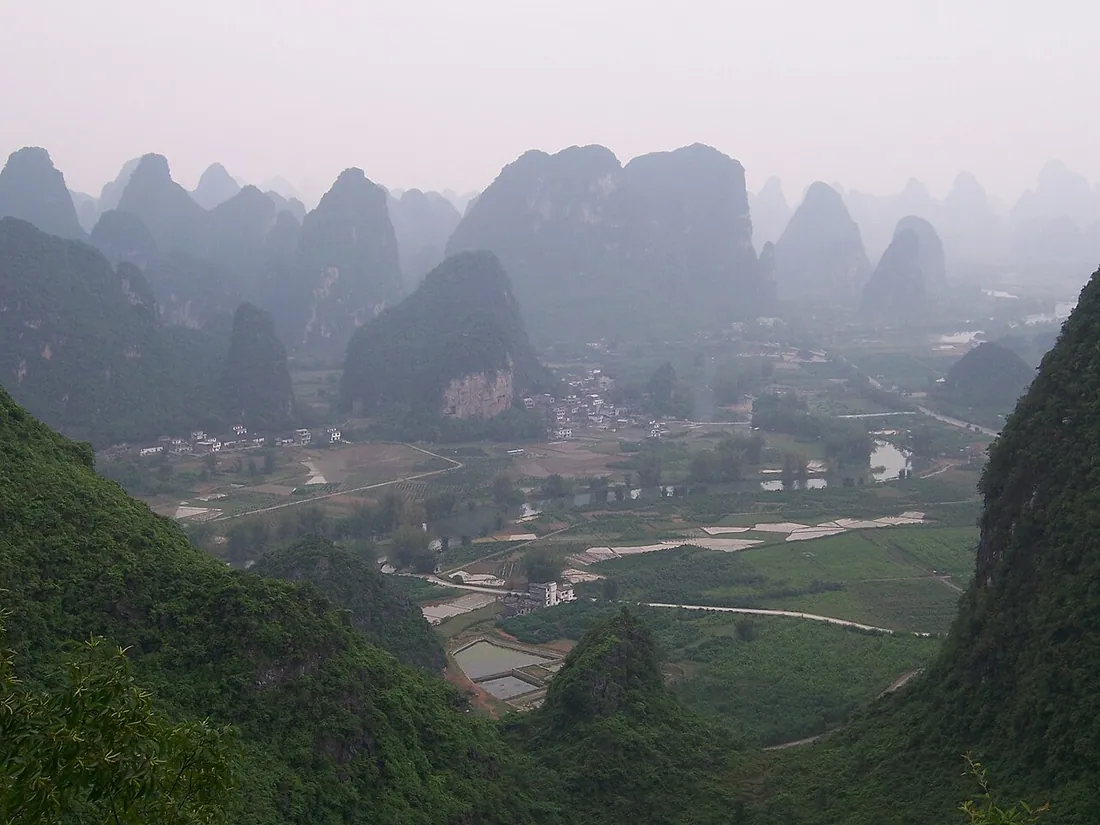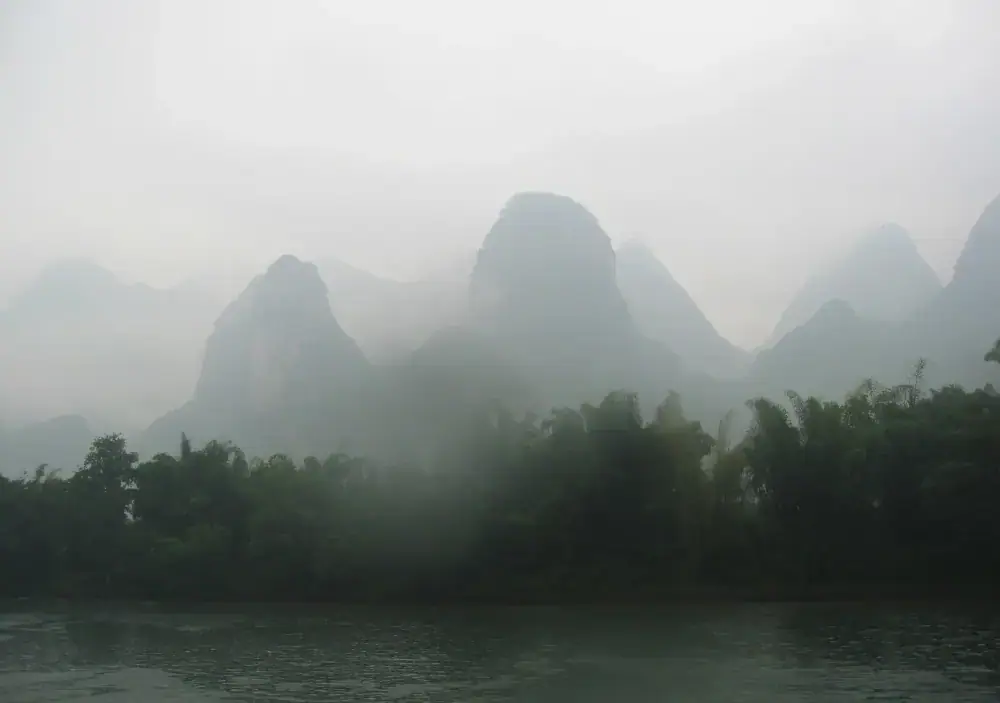


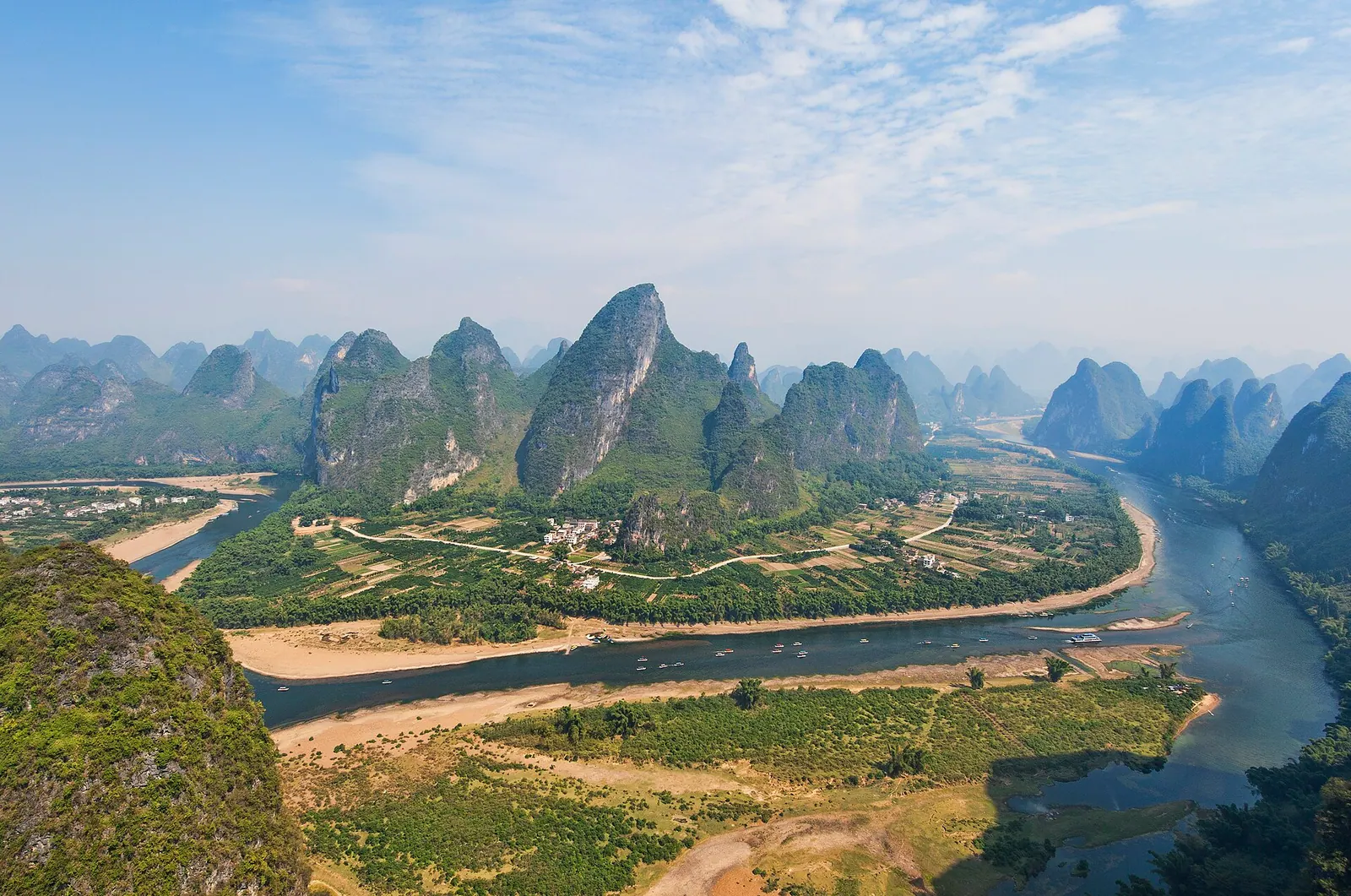
Li River karst peaks rising from the water near Guilin, Guangxi

Guangxi · Southwest China · 2026

Guangxi Province, Beyond Guilin

Karst peaks, a volcanic island, a Vietnam-border waterfall and the world's favorite noodle soup. One page. No ten tabs. Read it and book.

By the Guangxi Guide Team Updated August 2026 Firsthand trips across all 14 prefectures

Best Season

Oct to April

Dry and mild

Recommended Days

7 days

Minimum 5 for the essentials

Daily Budget

CNY 200-700

Backpacker to mid-range

Altitude

0-1,100m

No acclimatization needed

Four landscapes, one province

Guangxi is China's only region that is coastal, border-facing and karst-covered at once. Break it into four landforms and a trip here never feels repetitive.

Which Guangxi is yours?

Pick the traveler you are and the route mostly writes itself. No ten tabs, no decision fatigue.

The postcard route, logistics included

First-timer

Guilin → Li River → Yangshuo → Longji

5 days

The safest first Guangxi trip: world-class karst, one easy rail spine and the most English spoken anywhere in the region. If you have never been to China, start here.

Guilin 桂林, Guangxi
2 days (1 for the river, 1 for the city)

Guilin 桂林

The karst landscape that put China on the postcard

Yangshuo 阳朔, Guangxi
2 to 3 days

Yangshuo 阳朔

Karst peaks, bamboo rafts and the slowest pace in China

Longji Rice Terraces 龙脊梯田, Guangxi
1 to 2 days (overnight for sunrise)

Longji Rice Terraces 龙脊梯田

Zhuang and Yao villages carved into the steepest terraces on earth

Where everything is

Guangxi hangs on one north-south rail spine: Guilin to Liuzhou to Nanning to Beihai. Every other destination branches off it. This is the mental map.

The rail spine · north to south

North · karst gateway

Guilin 桂林

The usual entry point. Li River cruise, Elephant Trunk Hill, and the launchpad for Yangshuo and Longji.

Central · food city

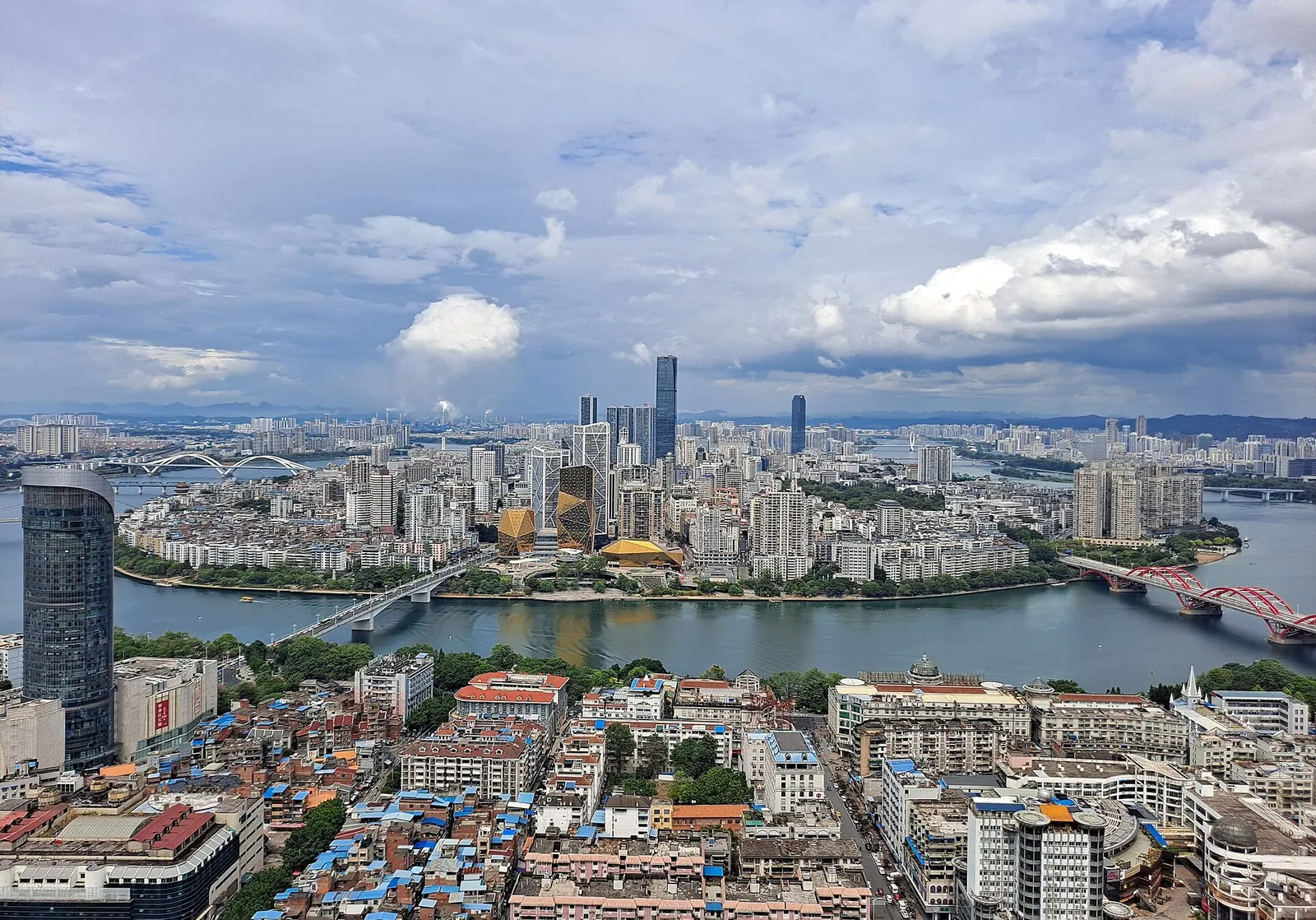
Liuzhou 柳州

Luosifen's birthplace, an easy one-hour rail hop south of Guilin on the way to Nanning.

South · capital & rail hub

Nanning 南宁

The capital and transfer point: branch southwest to Chongzuo, or continue south to Beihai.

South coast · beach & island

Beihai 北海

Silver Beach and the ferry to Weizhou Island, the end of the line.

Branches off the spine

Longji Rice Terraces 龙脊梯田

2 h north of Guilin

Zhuang and Yao villages above flooded, mirror-like terraces.

Yangshuo 阳朔

65 km south of Guilin

Li River bamboo rafts, Ten-Mile Gallery cycling and karst climbing.

Huangyao Ancient Town 黄姚古镇

East, near Hezhou

A lived-in 1,000-year-old town of stone lanes and covered bridges.

Chongzuo & Detian 崇左德天

3 h southwest of Nanning

Asia's largest transnational waterfall on the Vietnam border.

Hechi & Bama 河池巴马

Northwest corner

Raw karst: sinkholes, underground rivers and blue cave lakes.

How to use this: start in Guilin, ride the spine south, and add the branches that match your time. The classic 7-day loop is Guilin → Yangshuo → Liuzhou → Nanning → Chongzuo → Beihai.

Eight places worth planning around

The essentials, in rough geographic order from north to south. Each card tells you how long to stay and who it is for.

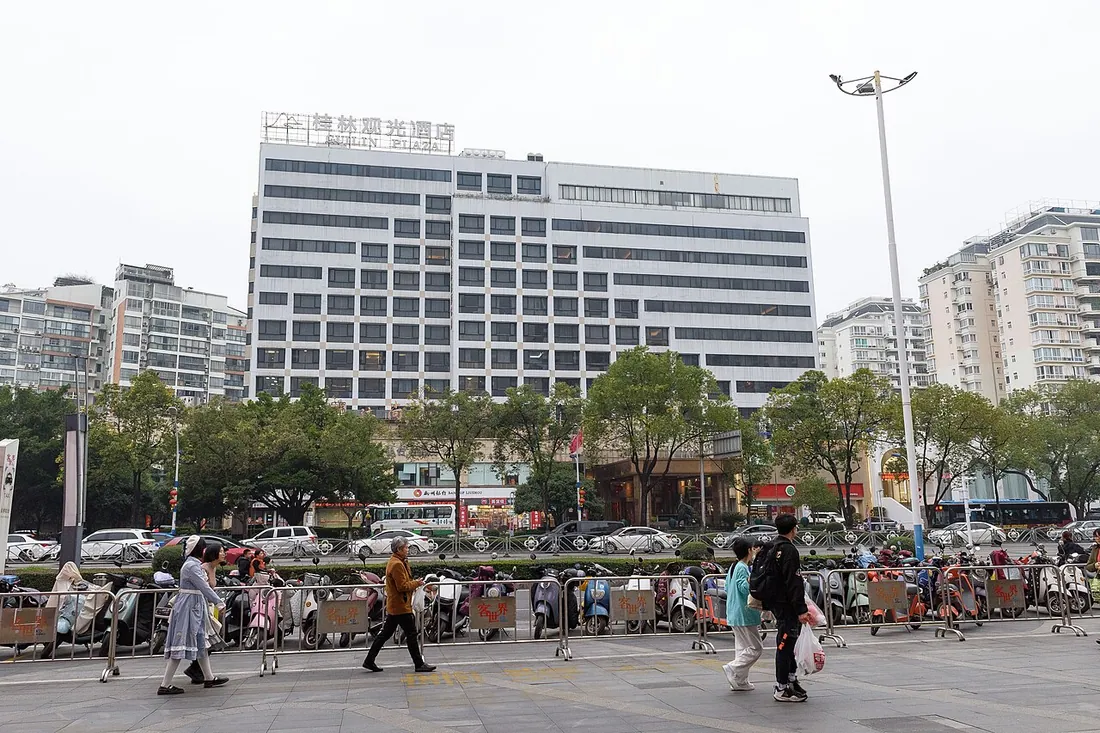
Guilin 桂林, Guangxi
2 days (1 for the river, 1 for the city)

Guilin 桂林

Northeast Guangxi

The karst landscape that put China on the postcard

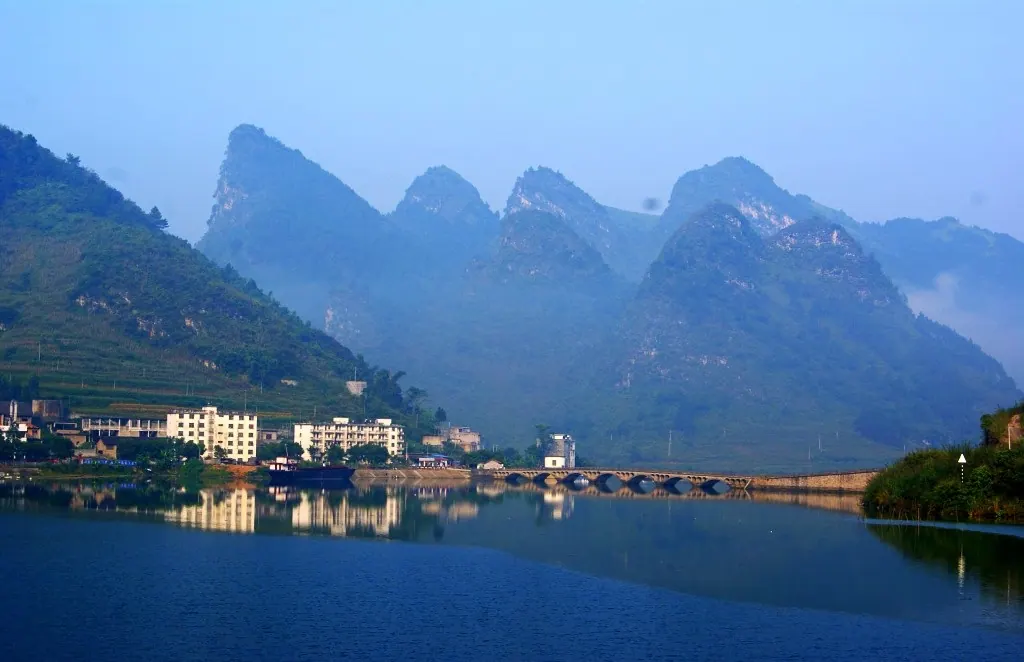
Guilin (桂林) is the classic Chinese landscape made real: hundreds of karst peaks rise straight from the Li River plain, their reflections doubling in the water. The city itself is compact and green, with the Elephant Trunk Hill (象鼻山) as its emblem and the Two Rivers and Four Lakes system lighting up after dark. The one experience everyone comes for is the Li River cruise to Yangshuo, four hours of drifting past fishermen on bamboo rafts, water buffalo on the banks, and peaks that look like they were drawn in ink. Most travelers treat Guilin as a launchpad: two days here, then onward to Yangshuo and the Longji terraces.

Highlights

  • -Li River cruise to Yangshuo
  • -Elephant Trunk Hill
  • -Reed Flute Cave
  • -Two Rivers and Four Lakes night cruise

We boarded the Li River boat at 8 AM as mist still hung between the peaks, and for the next four hours the scenery did the work. The stretch around Xingping is the one on the 20 RMB note, and when the boat rounded that bend, half the deck scrambled for the same photo. Back in the city, the night cruise through the Two Rivers and Four Lakes was less a boat ride and more a light show, with pagodas and bridges glowing over the water. Honest verdict: Guilin city is pleasant but not a destination in itself; the river is the point, and it earns every bit of its reputation.

Eat this

Guilin rice noodles (桂林米粉) (CNY 8-15) - The region's staple: rice noodles in a light broth with pickled beans, peanuts and braised beef. Eat it for breakfast like a local, standing at a counter, not a restaurant table.

Beer fish (啤酒鱼) (CNY 60-100) - Li River carp braised with beer, tomatoes and chilies. A Yangshuo invention that spread to every riverside restaurant in Guilin.

Know before you go

Skip the city on a tight schedule: If you have 3 days total, do the river cruise and head straight to Yangshuo. Guilin's old town is generic and the sights are spread thin.

Li River cruise booking: The 4-star boats (CNY 350-500) are worth the premium over the 3-star (CNY 190). Buy through your guesthouse a day ahead in peak season.

Best for: First-time visitors, classic landscape photography, families

Climate, transport and where to stay

Climate

Subtropical monsoon, 15-28°C most of the year; humid and rainy from May to August

How to get there

Guilin is northeast Guangxi's rail and air hub, the usual entry point for the whole region.

Train: High-speed rail from Guangzhou (2.5h, CNY 150-250), Shenzhen (3h, CNY 300) and Guiyang (2h, CNY 120).

Flight: Guilin Liangjiang Airport (KWL), 30km from the city, with flights from Beijing, Shanghai, Guangzhou and some international routes.

Where to stay

City center hotels (CNY 200-500) - Reliable chains near the Li River promenade and the pedestrian streets.

Riverside boutique (CNY 400-900) - Courtyard hotels along the Two Rivers and Four Lakes, walking distance to the night cruise.

A sample day 1

  • -Morning: Elephant Trunk Hill and the Li River promenade
  • -Afternoon: Reed Flute Cave
  • -Evening: Two Rivers and Four Lakes night cruise
Yangshuo 阳朔, Guangxi
2 to 3 days

Yangshuo 阳朔

Northeast Guangxi

Karst peaks, bamboo rafts and the slowest pace in China

Yangshuo (阳朔) is the answer to anyone who finds Guilin too much city. The county seat is a compact town wrapped by karst peaks, with the Yulong River (遇龙河) running through farmland to the west and the Li River to the east. The Ten-Mile Gallery (十里画廊) is a flat, scenic road perfect for e-biking, lined with Moon Hill, Big Banyan Tree and village markets. The Yulong River bamboo raft, poled by hand and silent but for birdsong, is quieter and more intimate than the big Li River boats. Yangshuo also happens to be one of China's best rock-climbing bases, with bolted limestone crags a short ride from town. West Street (西街) is the tourist heart, loud and neon after dark, but step two lanes away and you are back among rice paddies and roosters.

Highlights

  • -Yulong River bamboo raft
  • -Ten-Mile Gallery cycling
  • -Moon Hill
  • -Xingping Ancient Town

We rented an e-bike for CNY 60 and spent the best day of the trip riding the Ten-Mile Gallery with no plan: stopping for sugarcane juice at a roadside stall, detouring down a lane that dead-ended at a duck pond, and ending at Moon Hill for sunset. The Yulong River raft was the quieter highlight: forty minutes of a boatman poling us upstream while kingfishers darted over the water. West Street at night was, frankly, a bit much, but a ten-minute walk inland put us in a village where an old woman sold us pomelos from her courtyard. Yangshuo rewards you for leaving the main street.

Eat this

Beer fish (啤酒鱼) (CNY 70-120) - The signature Yangshuo dish. Order it at a riverside restaurant outside West Street for a better price and a view of the peaks.

Yangshuo stuffed river snails (螺蛳酿) (CNY 40-60) - Snail shells stuffed with pork and water chestnut, a local specialty you will not find elsewhere.

Know before you go

West Street is not the real Yangshuo: It is a pedestrian mall of souvenir shops and bars. Use it for dinner, then explore the lanes and villages around town.

Raft prices vary: Yulong River rafts run CNY 250-350 depending on the section. Agree the price and the exact stretch before boarding.

Best for: Cyclists, climbers, slow travelers, anyone who wants scenery without a tour bus

Climate, transport and where to stay

Climate

Same subtropical band as Guilin, 14-28°C; spring and autumn are best for cycling and rafting

How to get there

Yangshuo sits 65km south of Guilin, reached by rail, bus or the Li River cruise itself.

Train: Yangshuo station is a 30-minute shuttle from town; trains from Guilin run in 30 minutes (CNY 25).

Flight: No airport; fly into Guilin Liangjiang (KWL) then transfer by train, bus or private car.

Where to stay

West Street guesthouses (CNY 100-300) - Hostels and small inns in the pedestrian core, close to everything but loud after dark.

Yulong River retreats (CNY 400-900) - Countryside hotels with mountain views, pools and free bikes for the Ten-Mile Gallery loop.

A sample day 1

  • -Morning: Yulong River bamboo raft
  • -Afternoon: Ten-Mile Gallery e-bike loop to Moon Hill
  • -Evening: dinner, then a quiet village lane away from West Street
Longji Rice Terraces 龙脊梯田, Guangxi
1 to 2 days (overnight for sunrise)

Longji Rice Terraces 龙脊梯田

Longsheng County, North Guangxi

Zhuang and Yao villages carved into the steepest terraces on earth

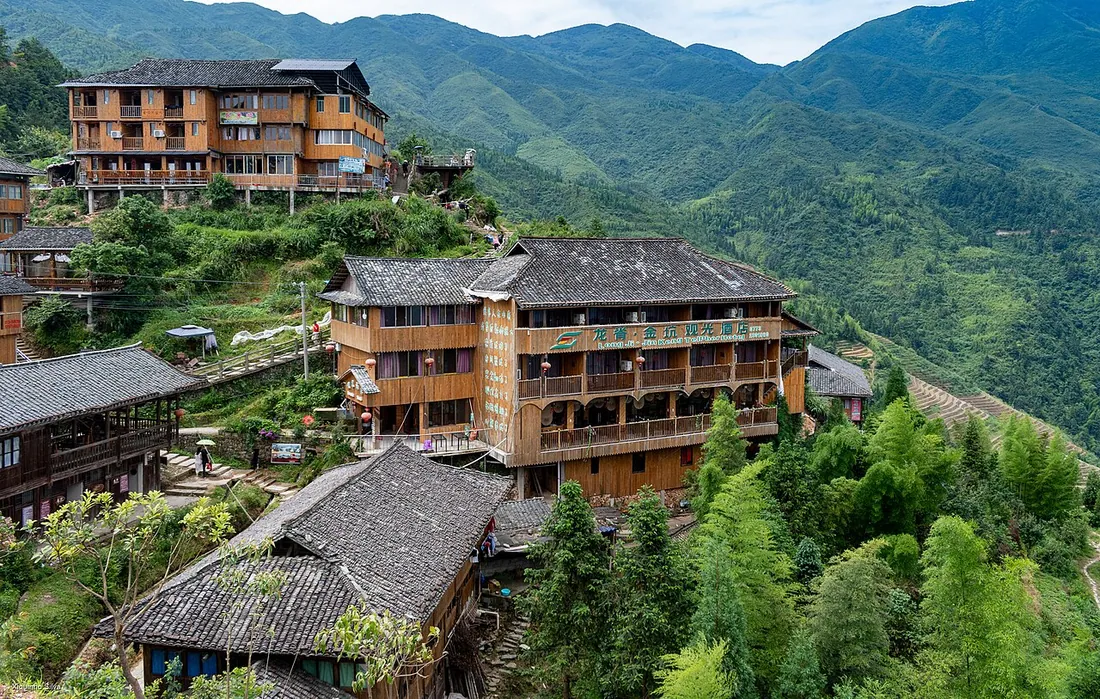
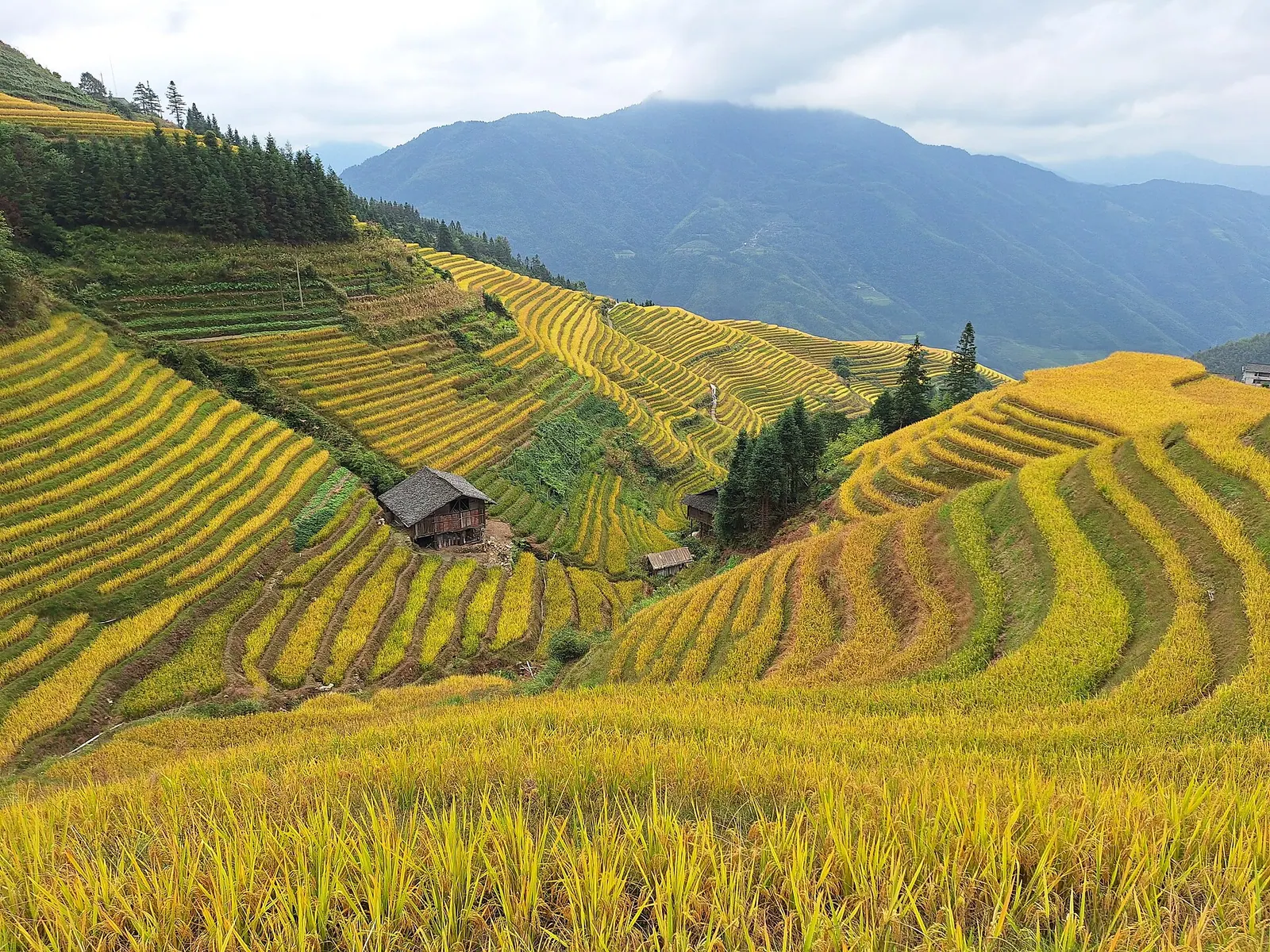
The Longji Rice Terraces (龙脊梯田), two hours north of Guilin, are the work of the Zhuang and Yao people over 650 years: rice paddies stacked from 300m to 1,100m, so steep they had to be carved by hand. The two main viewpoints are Ping'an (平安) and Jinkeng (金坑), connected by winding mountain roads. In spring the flooded terraces mirror the sky; in autumn they turn gold. The villages themselves are the second draw: Longji Ancient Zhuang Village and Huangluo Yao Village, where women wear waist-length hair as a cultural signature. Stay overnight in a wooden guesthouse above the terraces and the sunrise arrives with the roosters.

Highlights

  • -Ping'an and Jinkeng viewpoints
  • -Longji Ancient Zhuang Village
  • -Huangluo Yao Village
  • -Flooded-terrace spring reflections

We arrived in Ping'an at dusk and hiked to the Seven Stars with Moon viewpoint carrying a headlamp, then came back at 5:30 AM to watch the sun ignite the flooded paddies one terrace at a time. The Yao women in Huangluo, with their floor-length hair coiled on top of their heads, invited us into a wood-framed home for oil tea, sweet and gingery. The real lesson: do not day-trip this. The terraces empty out after the buses leave, and that is when the place belongs to you.

Eat this

Bamboo-tube rice (竹筒饭) (CNY 15-25) - Sticky rice steamed inside green bamboo over a fire, sold by Yao villagers along the paths. Eat it hot.

Oil tea (油茶) (CNY 10-20) - Pounded tea with ginger, peanuts and puffed rice. The Yao staple that fuels mountain mornings.

Know before you go

Day-trip crowds peak 10 AM to 3 PM: Tour buses from Guilin arrive by mid-morning. Sleep on the mountain and you get the terraces to yourself before 9 AM and after 4 PM.

The stairs are real: There is no flat ground. Pack light, wear grippy shoes, and budget extra time for the climbs between viewpoints.

Best for: Photographers, culture seekers, anyone willing to climb for a view

Climate, transport and where to stay

Climate

Cooler mountain air, 10-25°C; terraces flood April to June and turn gold September to October

How to get there

Longji is a 2-hour drive north of Guilin through winding mountain roads.

Train: No rail to the terraces; take a bus or private car from Guilin (CNY 40-60, 2h).

Flight: No airport; fly into Guilin and transfer by car or the public bus.

Where to stay

Ping'an village guesthouses (CNY 150-400) - Wooden Zhuang homes above the terraces with sunrise views and family kitchens.

Jinkeng cable-car hotels (CNY 300-600) - Modern stays near the cable car top station for the panoramic lookouts.

A sample overnight

  • -Afternoon: arrive, hike to the Seven Stars with Moon viewpoint
  • -Sunrise: terrace reflections from the upper lookouts
  • -Late morning: Huangluo Yao village, then return to Guilin
Beihai & Weizhou Island 北海涠洲岛, Guangxi
2 to 3 days (1 on the island minimum)

Beihai & Weizhou Island 北海涠洲岛

South Guangxi coast

China's youngest volcanic island and a beach break without the crowds

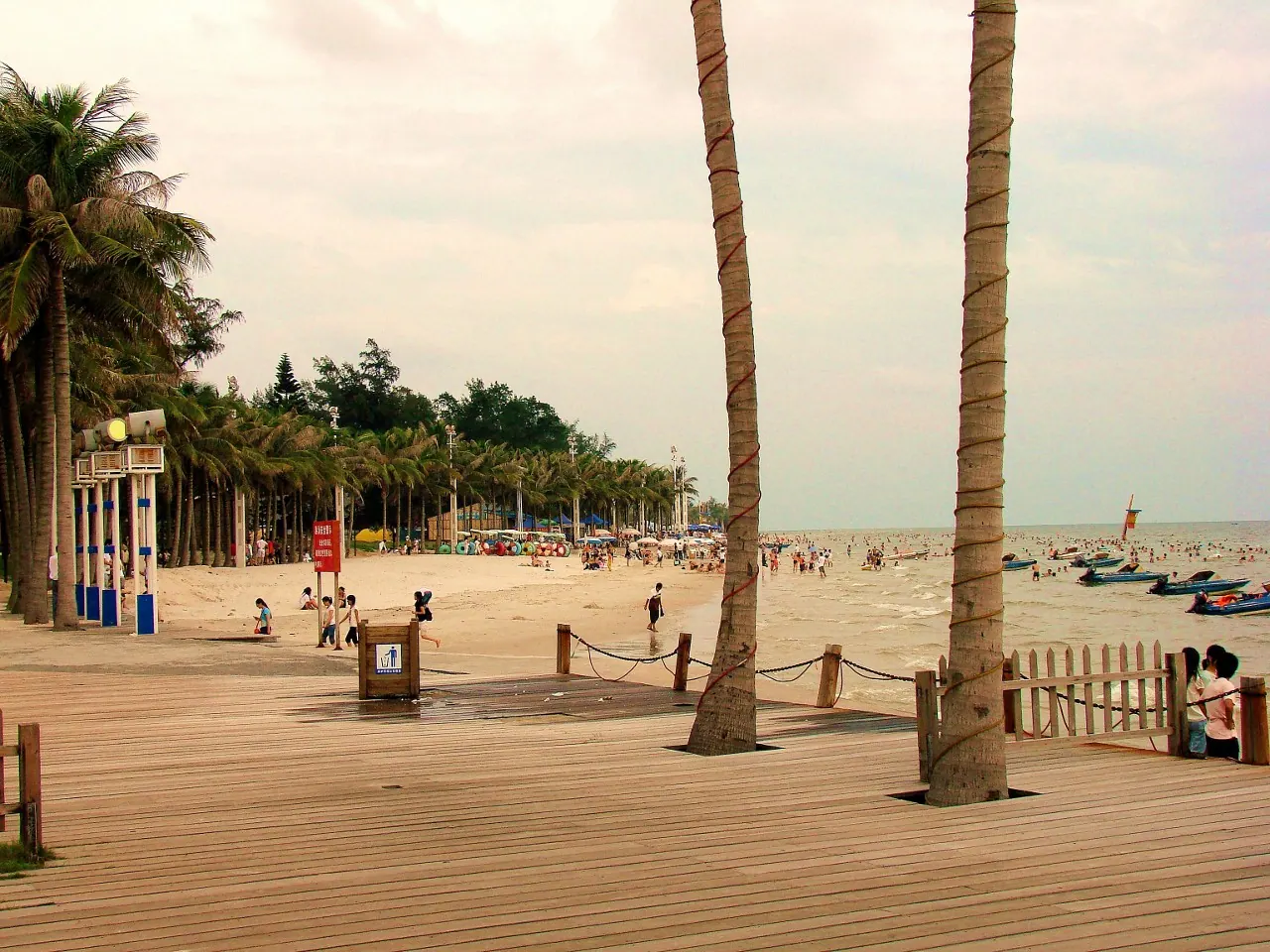
Beihai (北海) breaks the karst narrative: this is Guangxi's coastline, with Silver Beach (银滩), a broad sweep of pale sand, and an old arcade street left from its treaty-port days. But the real destination is Weizhou Island (涠洲岛), a 40-minute ferry to the south. Formed by volcanic eruptions only a few million years ago, it is China's youngest volcanic island: black basalt cliffs, a weathered Catholic church built by French missionaries in the 1860s, coral-stone villages, and a ring of banana groves. Rent an e-scooter and circle the island in a day, stopping at Crocodile Hill for the volcano crater and Shiluokou for sunset. Seafood is the point: buy it fresh at the morning market and have a guesthouse kitchen cook it.

Highlights

  • -Weizhou Island volcanic cliffs
  • -Silver Beach
  • -Beihai Old Street arcades
  • -Crocodile Hill crater

The ferry to Weizhou Island pitched in the swell, and half the boat turned green, but stepping off into the banana groves was worth it. We rented a scooter for CNY 80 and spent the day circling the island: black cliffs at Crocodile Hill, the coral-stone church where a caretaker told us the French built it for the fishermen, and a sunset at Shiluokou with the whole beach almost to ourselves. Dinner was the win: a bag of shrimp and clams from the market, handed to our guesthouse kitchen, on the table for a fraction of restaurant prices.

Eat this

Weizhou seafood (涠洲海鲜) (CNY 50-100/person) - Buy shrimp, clams and grouper at the morning market and pay your guesthouse to cook it. The freshest and cheapest meal in Guangxi.

Shrimp paste (虾酱) (CNY 15-30) - A pungent Beihai condiment used in stir-fries. An acquired taste, but it is the taste of the coast.

Know before you go

Ferry seasickness: The Beihai-Weizhou ferry is rough in wind. Book the faster boat and take motion-sickness medicine if you are prone.

Island prices run high: Restaurants near the ferry pier charge tourist rates. Eat where locals eat, or use the guesthouse kitchen.

Best for: Beach travelers, families, anyone who needs a break from karst and stairs

Climate, transport and where to stay

Climate

Coastal subtropical, 18-32°C; the dry, comfortable window is October to April

How to get there

Beihai is on the south coast, reached by rail or air; Weizhou Island is a 40-70 minute ferry offshore.

Train: High-speed rail from Nanning (1.5h, CNY 60-100) and Guilin (4h, CNY 180).

Flight: Beihai Fucheng Airport (BHY) has flights from major cities; the ferry to Weizhou runs about CNY 150 each way.

Where to stay

Silver Beach hotels (CNY 200-500) - Beachfront stays near the main strand, easy for an early ferry departure.

Weizhou Island guesthouses (CNY 150-400) - Family-run inns among banana groves; most will cook your market seafood.

A sample day 1

  • -Morning: ferry to Weizhou Island
  • -Afternoon: rent a scooter and circle to Crocodile Hill
  • -Evening: seafood from the market, cooked by your guesthouse
Chongzuo & Detian Waterfall 崇左德天瀑布, Guangxi
2 days from Nanning

Chongzuo & Detian Waterfall 崇左德天瀑布

Southwest Guangxi, Vietnam border

Asia's largest transnational waterfall on the Vietnam border

Chongzuo (崇左) sits on the Vietnam border, and its centerpiece is the Detian-Ban Gioc Waterfall (德天瀑布), Asia's largest transnational waterfall, shared between China and Vietnam. The falls cascade 200 meters across a three-tiered drop, best seen between June and October when the river runs full. Bamboo rafts ferry visitors to the base, and a path climbs to viewpoints where you can see Vietnamese vendors paddling across to sell trinkets. Nearby, the Mingshi Pastoral (明仕田园) valley is a quieter karst landscape of rivers and rice fields, often compared to Guilin but with a fraction of the crowds. This is frontier Guangxi: hotter, greener, and more raw than the polished north.

Highlights

  • -Detian-Ban Gioc Waterfall
  • -Mingshi Pastoral valley
  • -Friendship Pass (Youyi Guan)
  • -Huashan rock art (UNESCO)

The first sight of Detian, a curtain of white water falling across the border, stopped us mid-step. We rode a bamboo raft to the base and got drenched in the spray, then climbed to the high viewpoint where the falls split two countries in one frame. Mingshi was the surprise: we cycled through a valley of karst and rice fields with almost no one else on the road. If Guilin is the postcard, Chongzuo is the place the postcard forgot to include.

Eat this

Vietnamese-style coffee (越南咖啡) (CNY 15-25) - The border trades in strong, sweet condensed-milk coffee. Better here than in any big city in Guangxi.

Lemon duck (柠檬鸭) (CNY 50-80) - A sour-spicy Nanning classic often eaten on the road to Chongzuo. The preserved lemon is the point.

Know before you go

Waterfall flow varies hard: From November to April the river thins and the falls lose their drama. Go June to October for the full show.

Do not swim or cross: The border is real. Stay in the marked areas; crossing to the Vietnam side is not a tourist activity.

Best for: Waterfall chasers, borderland travelers, photographers seeking the road less taken

Climate, transport and where to stay

Climate

Hotter and greener than the north, 20-35°C; the waterfall peaks June to October

How to get there

Chongzuo is about 3 hours west of Nanning by road; the waterfall sits right on the Vietnam border.

Train: Chongzuo has a rail station from Nanning (1.5h, CNY 60); Detian then needs a further 2-hour bus or car.

Flight: No airport; fly into Nanning Wuxu (NNG) and drive or bus 3 hours to the falls.

Where to stay

Chongzuo city hotels (CNY 150-300) - Simple, functional bases for the waterfall day trip and border sites.

Mingshi valley guesthouses (CNY 300-600) - Karst-countryside stays near the pastoral scenery, quieter than the town.

A sample day 1

  • -Morning: drive from Nanning to Detian
  • -Midday: bamboo raft to the waterfall base
  • -Afternoon: high viewpoint, then the Mingshi valley on the way back
Liuzhou 柳州, Guangxi
1 to 2 days

Liuzhou 柳州

Central Guangxi

The birthplace of luosifen, the noodle soup that took over the world

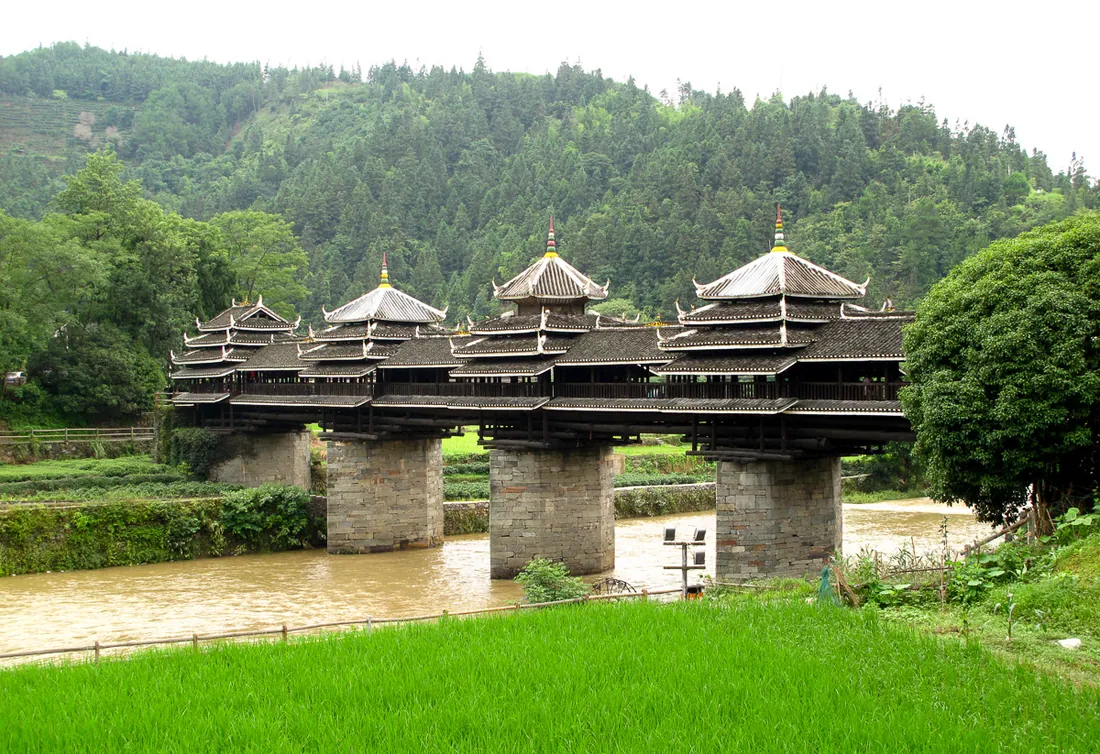
Liuzhou (柳州) is the city the food world fell in love with. Luosifen (螺蛳粉), its snail-broth rice noodle soup with pickled bamboo shoots and a famously divisive aroma, went from local breakfast to international sensation, and Liuzhou is its unapologetic source. Beyond the bowl, Liuzhou has a dramatic karst riverfront on the Liujiang River, a well-regarded industrial museum set in a former factory, and the nearby Chengyang Wind and Rain Bridge (程阳风雨桥) in Sanjiang County, a covered wooden bridge built without a single nail by the Dong people. The city is also a gateway to the Dong and Miao villages of northern Guangxi, some of the region's least-touristed corners.

Highlights

  • -Luosifen (the authentic bowl)
  • -Liujiang River night cruise
  • -Liuzhou Industrial Museum
  • -Chengyang Wind and Rain Bridge

We ordered our first real luosifen at a stall in Liuzhou and understood immediately: the broth is sour, spicy, savory and slightly funky, and the pickled bamboo shoot is the soul of it. The woman next to us slurped hers in five minutes and left without a word. In Sanjiang, the Chengyang bridge was worth the detour, a 100-meter wooden span with covered corridors where Dong villagers still cross daily. Liuzhou is not polished, but it is real in a way the postcard cities are not.

Eat this

Luosifen (螺蛳粉) (CNY 10-20) - The original, at the source. Ask for extra pickled bamboo shoot and a fried egg. The aroma is the point.

Liuzhou snail duck feet pot (螺蛳鸭脚煲) (CNY 60-100) - A shareable hotpot of duck feet and snails in the same sour-spicy broth. The city's other signature.

Know before you go

The smell is not a mistake: Luosifen's aroma comes from fermented bamboo shoot. If it is your first time, order the 'mild' broth and work up.

Chengyang bridge is a day trip: The bridge is 2-3 hours from Liuzhou in Sanjiang County. Combine it with an overnight in a Dong village.

Best for: Food travelers, noodle obsessives, culture seekers headed to Dong villages

Climate, transport and where to stay

Climate

Subtropical, 16-30°C; winters are mild and comfortable

How to get there

Liuzhou is a rail hub midway between Guilin and Nanning, easy to drop into any southbound route.

Train: High-speed rail from Guilin (1h, CNY 60) and Nanning (1h, CNY 70).

Flight: Liuzhou Bailian Airport (LZH) has limited domestic flights; most travelers arrive by rail.

Where to stay

City center hotels (CNY 150-350) - Practical stays near the Liujiang riverfront and the noodle district.

Sanjiang Dong village lodges (CNY 200-500) - Wooden stays near the Chengyang bridge, a day trip into the countryside.

A sample day 1

  • -Lunch: luosifen at a local stall
  • -Afternoon: Liujiang riverfront and the Industrial Museum
  • -Next day: Chengyang Wind and Rain Bridge in Sanjiang
Huangyao Ancient Town 黄姚古镇, Guangxi
1 day (overnight to catch the empty mornings)

Huangyao Ancient Town 黄姚古镇

Hezhou, East Guangxi

A 1,000-year-old town of stone lanes and karst, still lived in

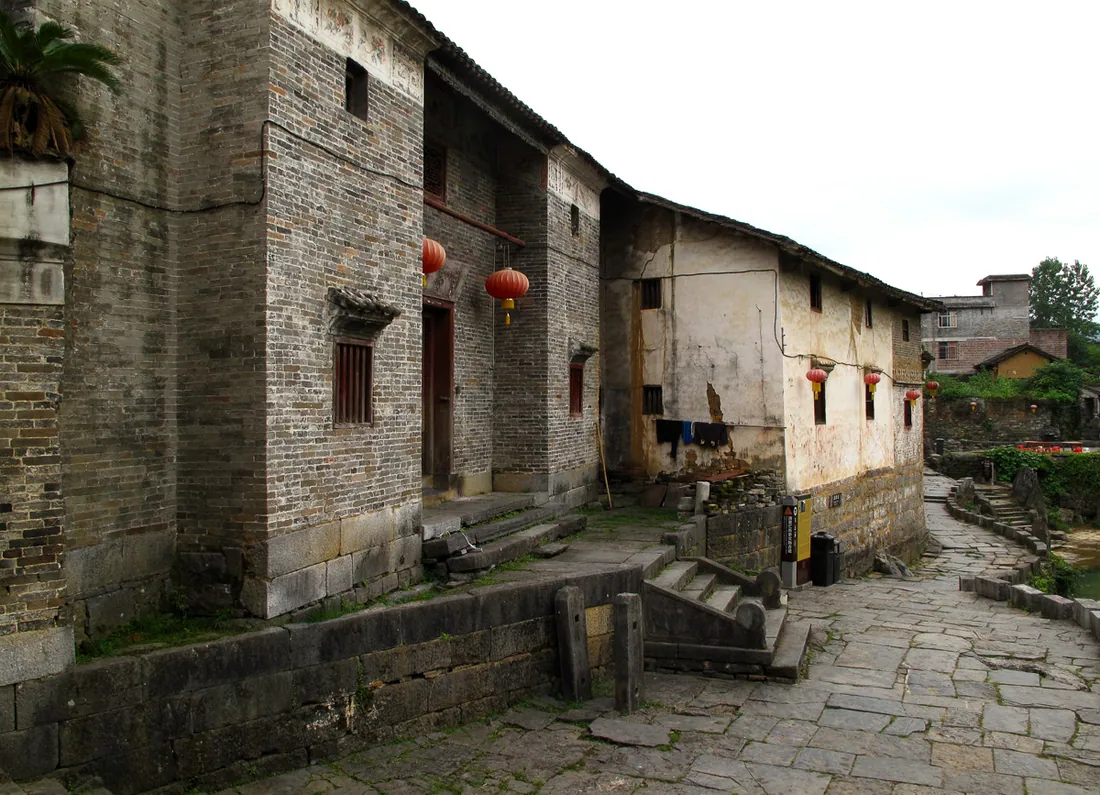
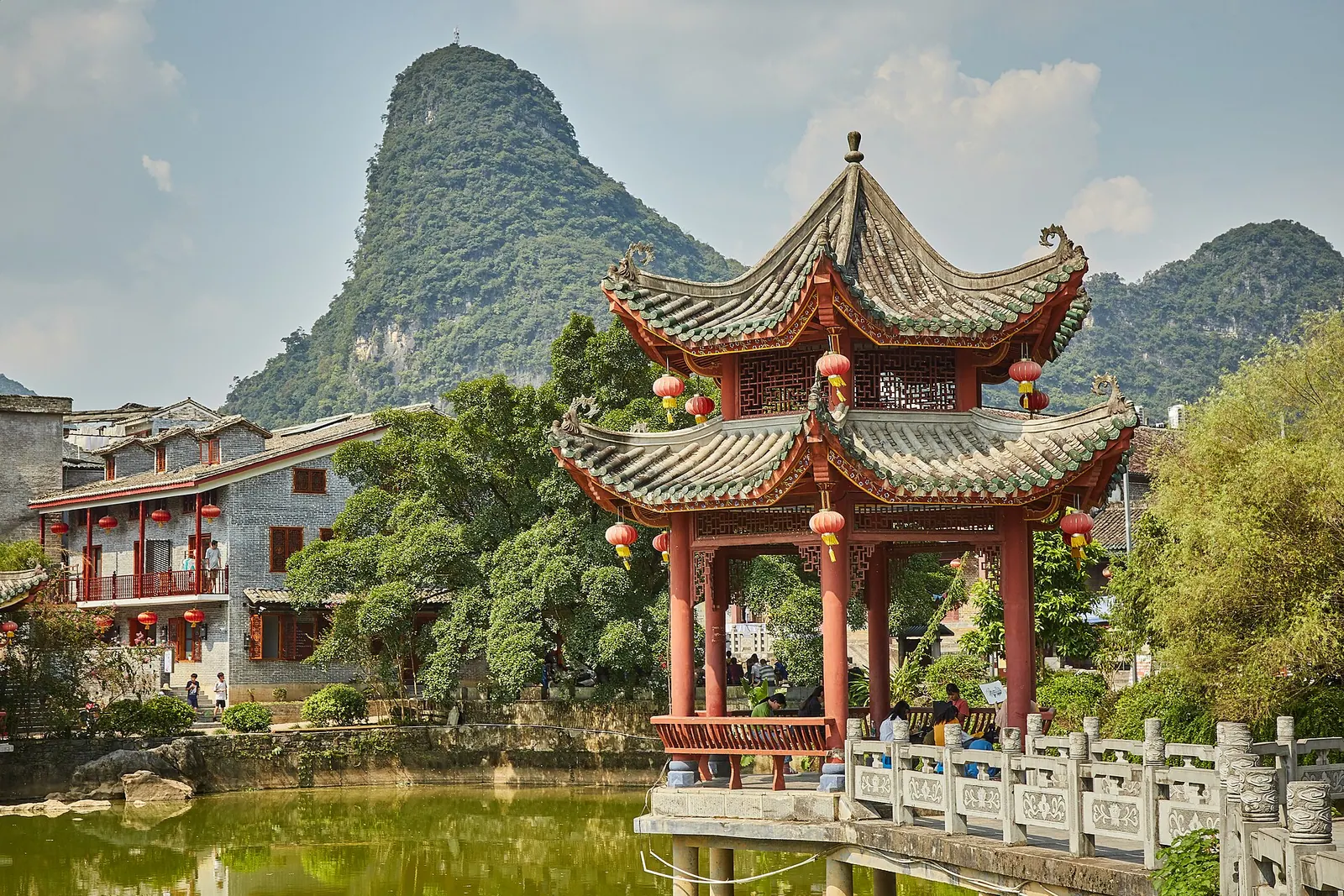
Huangyao Ancient Town (黄姚古镇), near Hezhou, is a 1,000-year-old settlement of gray stone lanes, covered bridges and ancestral halls, set among karst peaks and connected by a clear river. It was a trade stop on an old route between Guangdong and Guangxi, and the Huang and Yao families who founded it are still there. Unlike more famous ancient towns, Huangyao stays lived-in: laundry hangs over the lanes, tea is sold from courtyard homes, and the Dragon Bridge (带龙桥) still carries daily foot traffic. Come for a slow day of wandering, a bowl of local rice noodles, and a night in a converted courtyard guesthouse when the day-trippers are gone.

Highlights

  • -Dragon Bridge
  • -Stone lanes and ancestral halls
  • -Riverside tea houses
  • -Courtyard guesthouses

We arrived at Huangyao late afternoon and walked the lanes as the day-trippers left, and the town exhaled. A woman sold us rice wine from a jar in her doorway; the Dragon Bridge glowed at dusk. The next morning at 7 AM the lanes were empty but for a man washing vegetables in the river, and it was the most peaceful hour of the whole trip. Huangyao is the antidote to Yangshuo's West Street.

Eat this

Huangyao tofu (黄姚豆腐) (CNY 20-40) - Soft, faintly smoky tofu made with local spring water. Fried, steamed or in soup, it is the town's edible signature.

Fermented rice wine (米酒) (CNY 10-30) - Sweet homemade rice wine sold from courtyard doorways. Buy a bottle and drink it on the bridge.

Know before you go

Overnight or nothing: Huangyao as a day trip from Guilin means sharing the lanes with busloads. Sleep over and the town is yours.

Cobblestones are uneven: The stone lanes are beautiful and ankle-testing. Wear flat, sturdy shoes.

Best for: Ancient-town lovers, slow travelers, photographers of old stone and water

Climate, transport and where to stay

Climate

Mild and green, 12-27°C; spring and autumn are the sweet spots

How to get there

Huangyao sits in eastern Guangxi near Hezhou, reachable from Guilin or Yangshuo in a half day.

Train: Hezhou has high-speed rail from Guilin (1h, CNY 60); then a 1-hour bus to Huangyao.

Flight: No airport; arrive via Guilin or Hezhou by rail, then connect by bus.

Where to stay

Old town courtyard inns (CNY 150-400) - Converted stone houses inside the ancient lanes, the reason to stay overnight.

Riverside guesthouses (CNY 200-500) - Stays facing the river and the Dragon Bridge, quiet after dark.

A sample overnight

  • -Afternoon: arrive, wander the stone lanes as day-trippers leave
  • -Evening: rice wine on the Dragon Bridge
  • -Morning: empty lanes at 7 AM, then depart
Bama & Hechi 巴马河池, Guangxi
1 to 2 days

Bama & Hechi 巴马河池

Northwest Guangxi

The 'longevity village' and Guangxi's karst secret world

Hechi (河池) in northwest Guangxi is karst country at its rawest: a landscape of sinkholes (tiankeng), underground rivers and cave systems, far from the polished tourist north. Its most famous spot is Bama (巴马), marketed as a 'longevity village' for its high number of centenarians, attributed to the spring water, mountain air and a simple diet. Beyond the health-tourism framing, the region holds genuine wonders: Baimo Cave (百魔洞), a vast karst cavern; the Sanyue Cave (三门海) with its three sky-blue sinkhole lakes; and the surrounding villages of the Yao minority. This is slow, rural Guangxi, best for travelers who want to see where the karst begins before it becomes a postcard.

Highlights

  • -Baimo Cave
  • -Sanyue Cave's sinkhole lakes
  • -Bama longevity villages
  • -Yao minority villages

Bama was the strangest stop on our trip: the 'longevity village' framing feels commercial, with buses of domestic tourists buying spring water, but step past it and the karst is extraordinary. We rode a small boat through Sanyue Cave's three sinkhole lakes, the water impossibly blue, and met a Yao family who served us corn wine in a stilt house. Hechi is not easy to reach and not easy to explain, but it is the Guangxi most foreigners never know exists.

Eat this

Bama hemp-oil soup (火麻汤) (CNY 30-50) - A silky local soup made from hemp seeds, credited by locals with the longevity effect. Nutty and warming.

Yao oil tea and corn wine (油茶/玉米酒) (CNY 10-30) - The Yao staples. The corn wine is strong; sip, do not shoot.

Know before you go

Longevity claims are marketing: Enjoy the clean air and water, but treat the centenarian marketing with a grain of salt. The real draw is the landscape.

Little English, few ATMs: Carry cash and an offline translation app. Hechi is the least tourist-facing stop on this list.

Best for: Off-the-beaten-path travelers, cave enthusiasts, anyone curious about the longevity lore

Climate, transport and where to stay

Climate

Karst highland, 14-28°C; dry and mild from October to April

How to get there

Hechi is northwest Guangxi, the least-connected stop on this list and all the better for it.

Train: High-speed rail from Nanning to Hechi (2h, CNY 100); Bama is then 1.5 hours by bus.

Flight: Hechi Jinchengjiang Airport has limited flights; most arrive by rail from Nanning.

Where to stay

Bama village guesthouses (CNY 100-250) - Simple stays near the longevity villages and the caves.

Hechi city hotels (CNY 150-300) - Practical bases for day trips to the sinkholes and underground rivers.

A sample day 1

  • -Morning: Sanyue Cave's three sinkhole lakes by boat
  • -Afternoon: Baimo Cave
  • -Evening: Yao village dinner with corn wine

The at-a-glance decision table

Destination, days, daily budget and who it suits, in one table. If you only read one thing, read this.

Destination Stay Daily budget Best for
Guilin 桂林 2 days (1 for the river, 1 for the city) CNY 400+ First-time visitors, classic landscape photography, families
Yangshuo 阳朔 2 to 3 days CNY 300+ Cyclists, climbers, slow travelers, anyone who wants scenery without a tour bus
Longji Rice Terraces 龙脊梯田 1 to 2 days (overnight for sunrise) CNY 250+ Photographers, culture seekers, anyone willing to climb for a view
Beihai & Weizhou Island 北海涠洲岛 2 to 3 days (1 on the island minimum) CNY 300+ Beach travelers, families, anyone who needs a break from karst and stairs
Chongzuo & Detian Waterfall 崇左德天瀑布 2 days from Nanning CNY 250+ Waterfall chasers, borderland travelers, photographers seeking the road less taken
Liuzhou 柳州 1 to 2 days CNY 250+ Food travelers, noodle obsessives, culture seekers headed to Dong villages
Huangyao Ancient Town 黄姚古镇 1 day (overnight to catch the empty mornings) CNY 250+ Ancient-town lovers, slow travelers, photographers of old stone and water
Bama & Hechi 巴马河池 1 to 2 days CNY 200+ Off-the-beaten-path travelers, cave enthusiasts, anyone curious about the longevity lore

Daily budgets are mid-range per person, excluding the Li River cruise and Weizhou ferry. See the calculator below for a full estimate.

Pick your days, see the route

Start in Guilin and work south. Choose a length and the route updates.

3-day trip

Guilin and Yangshuo in a weekend

The classic first taste

Guilin > Li River > Yangshuo

First-time visitors, short trips

Roughly CNY 1,700 mid-range, before the cruise

  • Day 1: Arrive Guilin, Elephant Trunk Hill, Two Rivers and Four Lakes night cruise
  • Day 2: Li River cruise to Yangshuo, West Street at night
  • Day 3: Yulong River raft, Ten-Mile Gallery cycling, depart

What will it cost?

Pick a comfort level and a length, add the big-ticket extras, and get a per-person estimate in seconds.

Comfort level

Trip length

7 days

3 days 14 days

Add the big-ticket extras

Estimated per person

CNY 3,850

Based on mid-range at CNY 550/day over 7 days, plus your extras.

Excludes international flights to China. Prices are 2026 averages and move with the season.

What the big items cost

The handful of fixed costs that drive most of a Guangxi budget. 2026 prices, per person.

Cruises and rafts

  • Li River cruise (4-star) CNY 350-500
  • Li River cruise (3-star) CNY 190
  • Yulong River bamboo raft CNY 250-350
  • Two Rivers and Four Lakes night cruise CNY 190
Entry tickets

  • Longji Rice Terraces CNY 80
  • Reed Flute Cave CNY 90
  • Detian Waterfall CNY 80
  • Elephant Trunk Hill Free

Transport

  • Weizhou Island ferry CNY 150 each way
  • Guilin-Guangzhou high-speed rail CNY 150-250
  • Beihai-Nanning rail CNY 60-100

Guangxi or Yunnan?

The two southwest giants often get compared. Here is the honest split.

Choose Guangxi if...

  • Compact: the essentials fit in 7 days
  • No altitude: 0 to 1,100m, zero acclimatization
  • Three landscapes: karst, coast and a Vietnam border
  • Noodle culture: luosifen, Guilin rice noodles, beer fish
  • Easier, cheaper entry point to China

Choose Yunnan if...

  • Spread out: plan 8 to 14 days minimum
  • High altitude: Shangri-La sits at 3,400m
  • Snow peaks, ancient towns and tropical rainforest
  • 25 ethnic groups, Across the Bridge Noodles
  • More epic, but harder on the body and the schedule

The short answer: for a first or shorter trip to China, Guangxi is the easier win. It is compact, altitude-free and cheaper. Save Yunnan for when you have two weeks and the appetite for highland distances.

Half the planning is done already. Pick the route that fits your days and the rest writes itself.

Lock in a route

The food is worth the trip alone

Guangxi's noodles run sour, spicy and savory, and luosifen is only the headline. Here is the full menu, city by city.

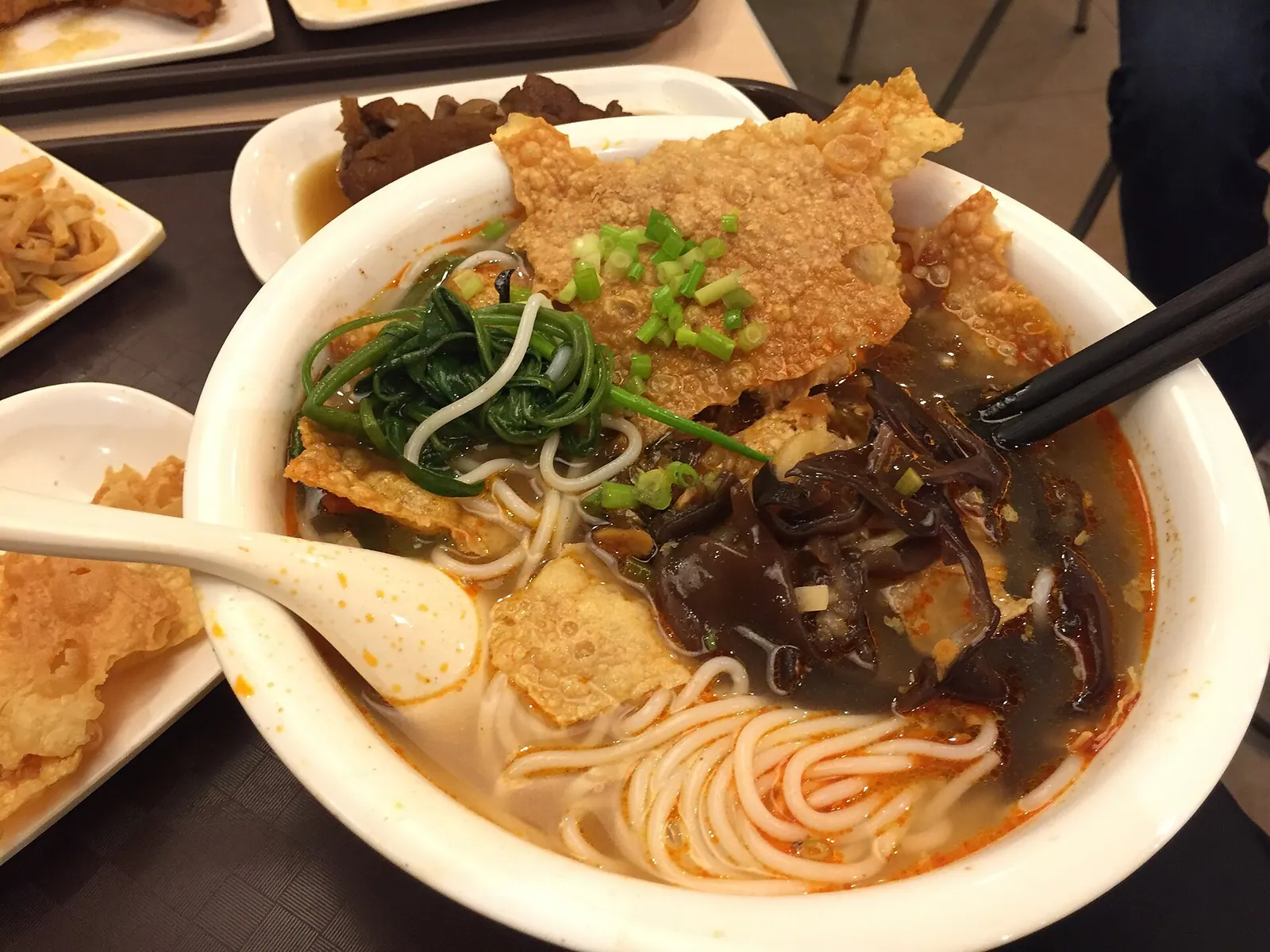
A bowl of luosifen snail rice noodles

The one dish

Luosifen 螺蛳粉

Born in Liuzhou in the 1980s, this snail-broth rice noodle soup with fermented bamboo shoot went from local breakfast to global obsession. The aroma is the point: sour, funky and deeply savory.

What's in it

Rice noodles, a broth simmered from river snails and pork bones, pickled bamboo shoot (the famous smell), fried tofu skin (腐竹), peanuts, black fungus, and a spoon of chili oil. Add a fried egg and extra bamboo shoot.

How to eat it

Order 微辣 (mild) for your first bowl, add vinegar to taste, and slurp fast while the noodles are springy. In Liuzhou it is breakfast and late-night food — the busiest stalls at 1 AM are the best.

Where to get it

Anywhere, but the reference bowl is in Liuzhou. Look for the stall with the longest line rather than any single name. Outside Liuzhou, it is on menus across the region.

Take it home

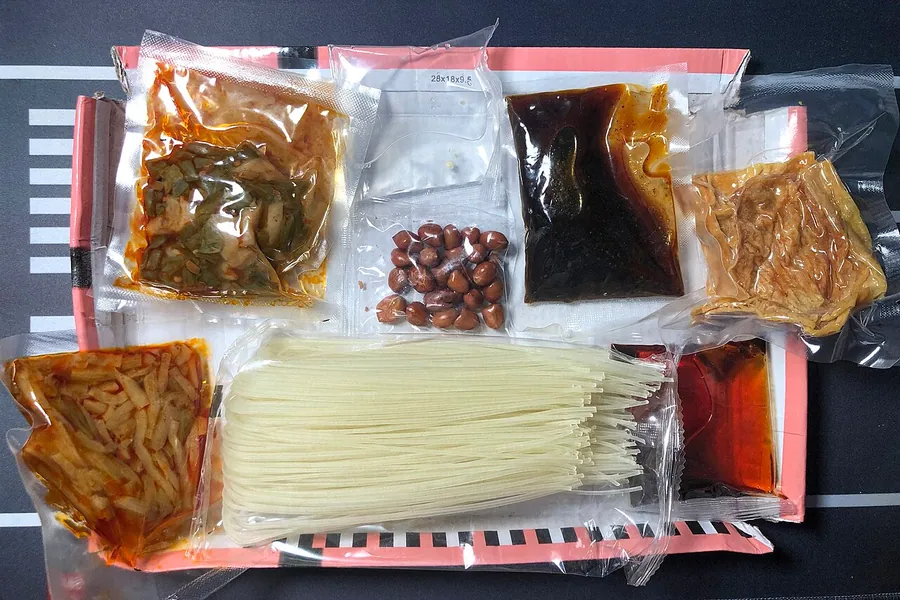
Instant luosifen packs (好欢螺, 螺霸王, 李子柒) are in every supermarket. Boil the noodles, then the broth, then assemble. It is 80% of the real thing and a great souvenir.

Nine more dishes worth planning around

Guilin rice noodles 桂林米粉

CNY 8-15

Guilin

The breakfast staple: rice noodles in a light broth with braised beef, fried pork, pickled beans, peanuts and scallion. Order it dry (卤菜粉) with a side of soup, and eat it standing, like a local.

Laoyoufen 老友粉

CNY 10-18

Nanning

Nanning's answer to comfort food: rice noodles in a sour-spicy broth built on fermented black beans, pickled bamboo shoot, garlic and chili, wok-fried before the soup goes in.

Beer fish 啤酒鱼

CNY 70-120

Yangshuo

River carp braised with beer, tomato and chili. The signature of Yangshuo; order it at a riverside restaurant outside West Street for a fairer price.

Lemon duck 柠檬鸭

CNY 50-80

Nanning

Sour-spicy duck with preserved lemon, a Nanning classic. The tartness cuts through the fat, and it only improves on the second day.

Five-color glutinous rice 五色糯米饭

CNY 10-20

Zhuang festival food

Sticky rice dyed black, red, yellow, purple and white with wild plants for the Zhuang Sanyuesan festival. Eaten with salted fish or sugar.

Paper-wrapped chicken 纸包鸡

CNY 30-60

Wuzhou

Chicken wrapped in jade paper and cooked in hot oil or a clay pot, sealing in the juices. A Wuzhou specialty that reads simple and tastes rich.

Bamboo-tube rice 竹筒饭

CNY 15-25

Longji

Sticky rice steamed inside green bamboo over a fire, sold by Yao villagers along the terrace paths. Eat it hot, straight from the tube.

Huangyao tofu 黄姚豆腐

CNY 20-40

Huangyao

Soft, faintly smoky tofu made with the town's spring water. Fried, steamed or in soup, it is Huangyao's edible signature.

Weizhou seafood 涠洲海鲜

CNY 50-100

Weizhou Island

Buy shrimp, clams and grouper at the morning market and pay your guesthouse to cook it. The freshest, cheapest meal in Guangxi.

What to eat in each city
City Eat this
Guilin & Yangshuo Guilin rice noodles, beer fish, stuffed river snails (螺蛳酿), oil tea
Liuzhou Luosifen, snail duck-feet hotpot (螺蛳鸭脚煲)
Nanning Laoyoufen, lemon duck, sour-and-spicy snacks (酸嘢)
Beihai & Weizhou Seafood, shrimp paste (虾酱), sandworm porridge
Chongzuo Vietnamese-style coffee, lemon duck, border-market snacks
Longji & Hechi Bamboo-tube rice, oil tea, Yao corn wine, hemp-oil soup
Dietary notes: vegetarian, halal, spice and safety

Vegetarian and vegan

Possible but plan ahead. Noodles are the easiest route: Guilin rice noodles can be ordered without meat (素粉), and many dishes are vegetable-based. Carry a note saying 我吃素 (I eat vegetarian) — kitchens outside big cities may not be familiar with veganism.

Halal

Halal restaurants exist in larger cities, marked with a green 清真 sign. Guilin and Nanning have the most options. In small towns, stick to vegetable and egg dishes and ask about broth.

Spice level

Guangxi food is sour and savory more than numbingly spicy. Luosifen and laoyoufen carry real heat; ask for 微辣 (mild) or 不辣 (no chili) on your first bowl.

Allergies and safety

Peanuts, seafood and gluten are common. Peanut oil is the default cooking oil. Tell the kitchen in advance — a printed allergy card helps where English is thin.

Food safety

Eat at busy stalls where turnover is high, drink bottled or boiled water, and skip raw seafood away from the coast. Street food in Guilin, Liuzhou and Nanning is generally safe when freshly cooked.

What to bring home

Luosifen packs, dark tea, brocade and south-sea pearls — Guangxi's souvenirs are better than fridge magnets. Here is what to buy and where.

Instant luosifen noodle pack components

Instant luosifen 螺蛳粉速食包

CNY 10-20/pack

The easiest souvenir to love. Buy a few brands (好欢螺, 螺霸王, 李子柒) at any supermarket and compare at home.

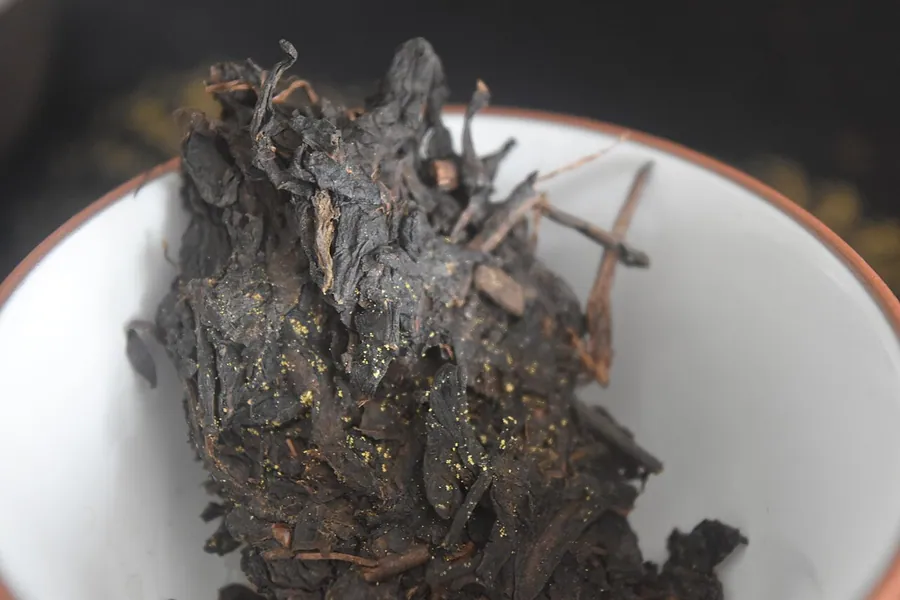
Liu Bao dark tea leaves with golden flower

Liubao tea 六堡茶

CNY 50-300

A fermented dark tea from Wuzhou, aged like pu-erh. Buy from a tea shop that lets you taste first.

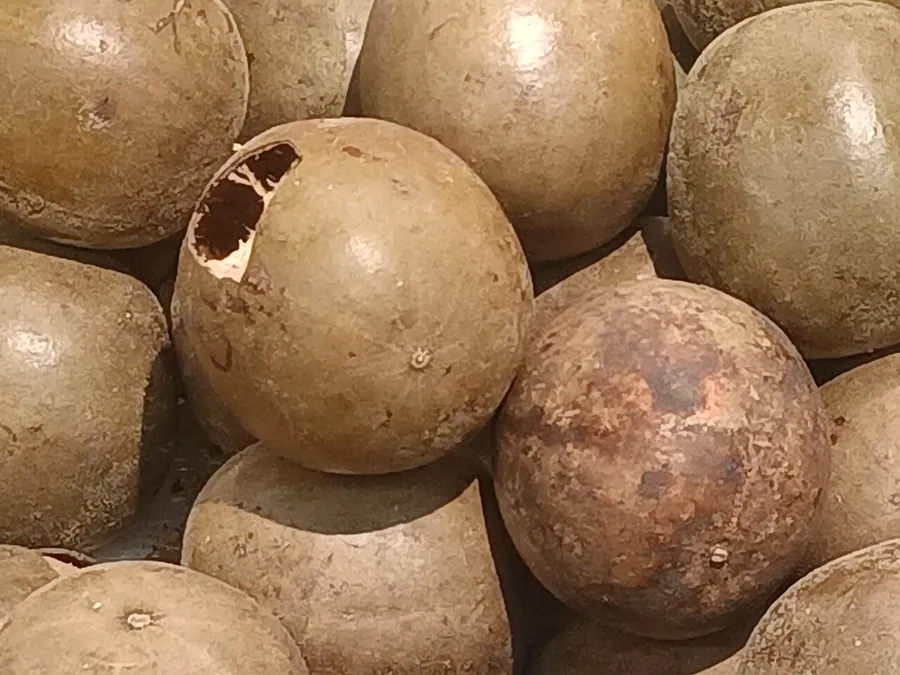
Dried monk fruit

Monk fruit 罗汉果

CNY 5-15 each

Dried fruit from Guilin's Yongfu county, used to sweeten tea. A natural, calorie-free sweetener.

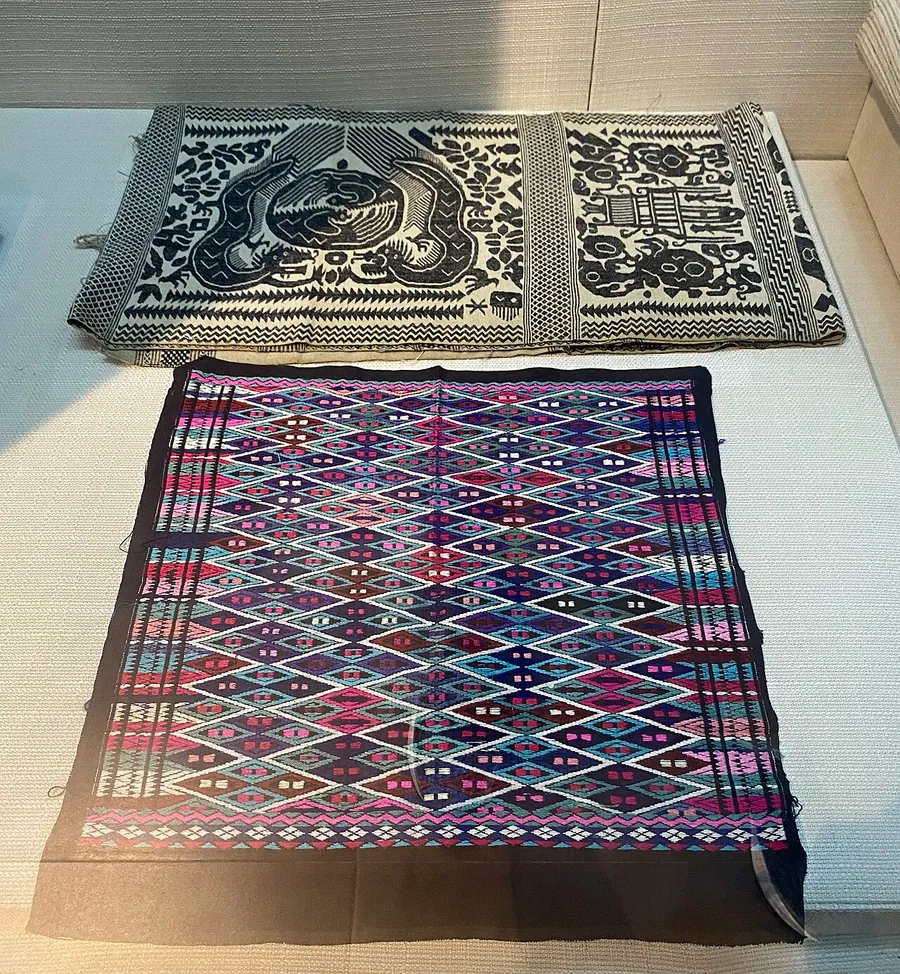
Zhuang brocade textile with geometric patterns

Zhuang brocade 壮锦

CNY 80-500

Handwoven Zhuang textiles in bold geometric patterns. Scarves and bags travel well; wall hangings are the real thing.

Embroidered ball sculpture at Liu Sanjie Park, Yangshuo

Embroidered balls 绣球

CNY 20-100

Zhuang love tokens from Jingxi, made of silk and ribbon. A lightweight, colorful gift.

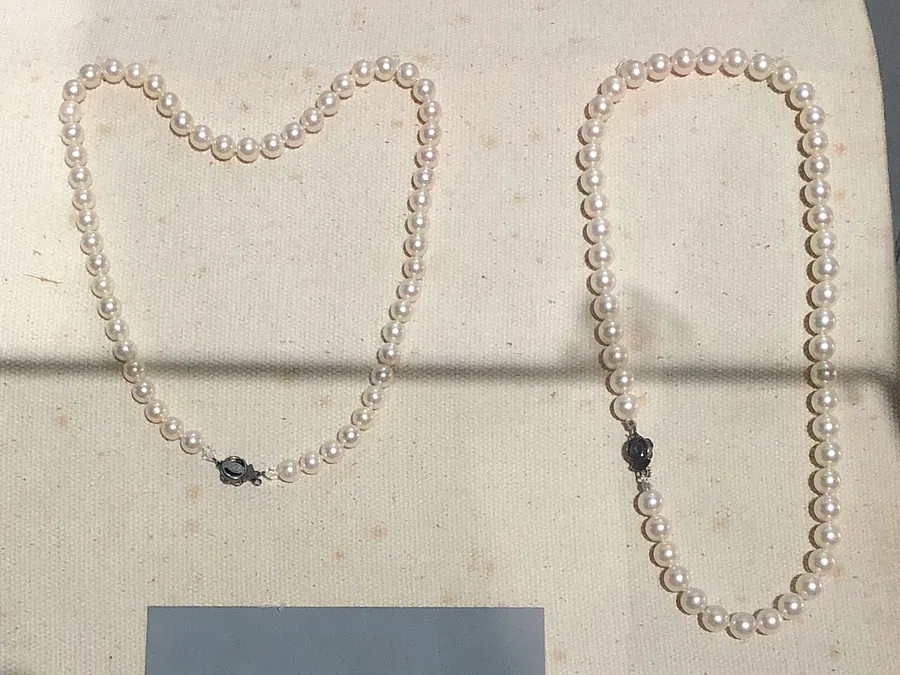
Hepu pearls from Beihai

South pearls 合浦珍珠

CNY 100+

Hepu, near Beihai, is one of China's historic pearl beds. Buy from a reputable shop and ask for a certificate.

Shopping tips
  • Supermarkets (Vanguard, RT-Mart) are the best place for luosifen packs and monk fruit at local prices.
  • For brocade, balls and tea, go to a specialist shop in Guilin or Nanning, not the tourist stalls at scenic spots.
  • Bargain politely at markets, but expect fixed prices in shops. Start around 70% of the asking price in tourist areas.
  • Check airline rules before buying liquids (rice wine, chili sauce) or large tea bricks.
  • Pearls and antiques need certification for export; stick to new, certified items.

When to go

Guangxi has no hard winter and no altitude, so there is almost always a good reason to be here. The one rule: avoid the rainy May and the humid peak of July and August unless you are chasing waterfalls.

Oct to April

The sweet spot

Dry and mild across the coast and the karst. The best overall window for Guilin, Yangshuo, Beihai and the terraces.

April to June

Terraces mirror season

Longji's paddies are flooded with water, turning them into reflective mirrors at sunrise. Spring greenery across the region.

June to October

Waterfall season

Detian Waterfall runs at full flow after the rains. Hot and humid elsewhere, but the borderland is at its best.

September to October

Golden harvest

The Longji terraces turn gold before the autumn harvest. A second peak window for photographers.

Guilin monthly climate

Approximate monthly averages for Guilin, from public long-term weather records. The coast (Beihai) runs a few degrees warmer in winter; the borderland (Chongzuo) stays warmer year-round.

Month JanFebMarAprMayJunJulAugSepOctNovDec
Avg high (°C) 111317232730333330251914
Avg low (°C) 571116212426252217128

Weather and what to pack

Guangxi is subtropical: no hard winter, no altitude, but real humidity. Here is what to wear each season and what to throw in the bag.

Spring

15-28°C

March to May

Wear: Light layers, a light rain jacket and an umbrella. Expect 'returning south' humidity (回南天) in March and April, when everything feels damp.

Longji's terraces are flooded and mirror-like from April. Green season, with occasional rain.

Summer

26-35°C

June to August

Wear: Breathable, quick-dry clothes, sunscreen, a hat and rain gear. It is hot and humid, and afternoon downpours are common.

Detian Waterfall runs at full flow. Best time for waterfalls and the coast, worst for exposed karst viewpoints.

Autumn

18-30°C

September to November

Wear: T-shirts for the day, a light jacket for the evening. The most comfortable season by far.

The sweet spot overall. Longji turns gold in September and October. October is peak season — book ahead.

Winter

8-18°C

December to February

Wear: A warm mid-layer, a jacket or light down coat for the north, and a sweater for the coast. Damp cold feels chillier than the number.

Mild by northern standards, but buildings often lack central heating, so pack for indoors too. Good for the coast and cities.

The six-item packing list
  • Grippy walking shoes: Longji's stairs, Huangyao's cobblestones and karst viewpoints are uneven and slippery when wet.
  • A light rain jacket: rain is possible in every season except mid-winter.
  • Motion-sickness medicine: the Beihai-Weizhou ferry is rough in wind.
  • A reusable bottle and sunscreen: summer heat is strong, and tap water is not for drinking.
  • An offline translation app and a printed allergy or dietary card if you have restrictions.
  • A universal plug adapter (China uses Type A/C/I sockets) and a power bank for long travel days.

Where to stay in Guangxi

From international hotels to wooden terrace inns, Guangxi's best beds are often its simplest. Here is how to choose, area by area.

A hotel in Guilin

International hotels

CNY 400-900

Familiar brands in Guilin, Nanning and Beihai city centers. Reliable, English-speaking front desks and easy taxis.

Stone lanes and courtyard inns inside Huangyao

Boutique & courtyard stays

CNY 300-700

Converted riverside houses in Guilin and Yangshuo, and stone courtyard inns inside Huangyao. The character option.

Yangshuo villages and fields between the karst peaks

Countryside guesthouses

CNY 150-400

Family-run inns in Yangshuo's villages, Longji's terrace villages and the Mingshi valley. Basic English, huge views.

Wooden stilt guesthouses above the Longsheng rice terraces

Special stays

CNY 200-600

Wooden Yao guesthouses above the Longji terraces, and Weizhou Island homestays that will cook your market seafood.

Where to stay in each area

Guilin

Stay near the Two Rivers and Four Lakes or the pedestrian streets for the night cruise. Guilin is a base, not a destination — two nights is enough.

Yangshuo

Skip the noisy West Street core. Choose a guesthouse in the villages along the Yulong River for karst views, free bikes and quiet.

Longji

Sleep on the mountain in Ping'an or Jinkeng, not at the valley bus stop. The sunrise over the flooded terraces is the entire reason to stay.

Beihai & Weizhou

Beihai: Silver Beach or the old town. On Weizhou, book a homestay that offers a market-cooking service — it is the best meal deal in Guangxi.

Chongzuo

Base in Chongzuo city for the Detian day trip, or stay in the Mingshi valley for quieter karst countryside and river views.

Huangyao & Hechi

In Huangyao, stay inside the old town walls; the town empties after the day-trippers leave. In Hechi, keep expectations basic and book ahead in peak weeks.

Booking tips for foreign travelers
  • Book through Trip.com (the English version of Ctrip), Booking.com or Agoda. All handle foreign cards and passport check-in.
  • In rural areas, guesthouses often are not on international platforms. Message them on WeChat or book through a local driver for a small fee.
  • Ask for a quiet room: West Street in Yangshuo and the ferry-pier area in Beihai can be loud after dark.
  • In peak season (October and Chinese holidays), book Longji and Weizhou Island at least a week ahead; both have limited beds.
  • Many guesthouses will arrange the Li River cruise, Longji transfers and scooter rentals for the same price or less than online.

Getting to and around Guangxi

Two airports, one high-speed rail spine, and short hops between cities. Most of the region connects in under three hours.

Guilin Liangjiang International Airport

By air

Two gateways

Guilin Liangjiang (KWL) serves the north and the classic loop; Nanning Wuxu (NNG) is the southern hub and the jump-off for Chongzuo and Beihai.

A CRH high-speed train

By rail

The high-speed spine

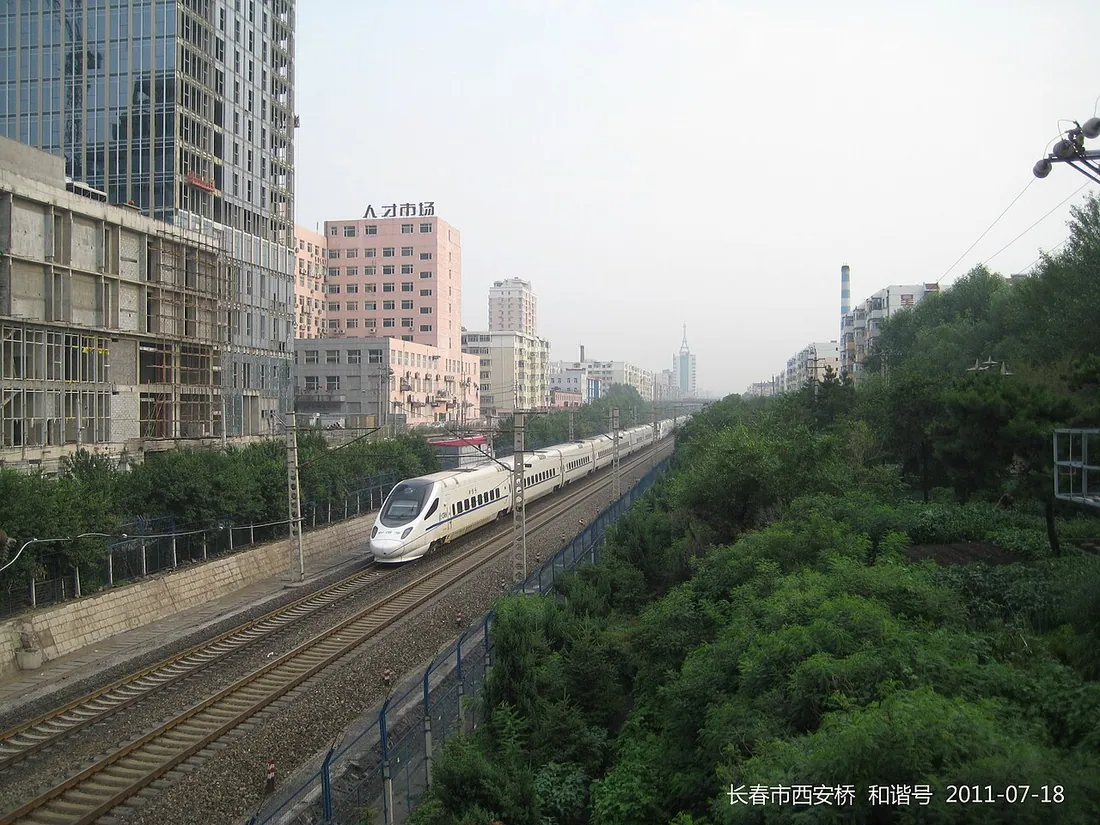
Guilin, Liuzhou, Nanning and Beihai sit on one high-speed line. Book on the official 12306 app or Trip.com; English interfaces are available on both.

Yangshuo countryside seen from above, explored by scooter or bicycle

By road

Buses and cars

Longji, Huangyao and Detian sit off the rail line. Public buses or a private driver (CNY 300-600/day) cover the last stretch.

Key rail times

Guilin → Yangshuo 30 min high-speed rail
Guilin → Liuzhou 1 h high-speed rail
Liuzhou → Nanning 1 h high-speed rail
Guilin → Nanning 3 h high-speed rail
Nanning → Beihai 1.5 h high-speed rail
Nanning → Chongzuo 1.5 h high-speed rail
Guangzhou → Guilin 2.5 h high-speed rail
Buying train tickets as a foreigner

Easiest: Trip.com. The English version of Ctrip sells China rail tickets for a small service fee, with an English interface and foreign-card payment. You pick up tickets automatically by scanning your passport at the station.

Cheapest: the 12306 app. The official app accepts foreign passports, but you must verify your identity in person at a station window once. After that you can buy and board with the app.

Seat classes. Second class (二等座) is comfortable and cheap; first class (一等座) has wider seats. Both are far better than flying for these distances. Tickets open about 15 days ahead and sell fast around Chinese holidays.

Getting around cities and the last mile

Ride-hailing: Didi (滴滴) is the default and works with an English interface and foreign cards. It is cheap, and drivers use the in-app translation. Use it instead of flagging unlicensed taxis at stations.

Metro and buses: Nanning has a modern metro; Guilin, Liuzhou and Beihai run on buses and ride-hailing. Public transport signs are increasingly bilingual in tourist areas.

Scooters and bikes: In Yangshuo and on Weizhou Island, rent an e-scooter (CNY 60-100/day) to explore at your own pace. It is the single best way to see the countryside.

Private drivers: For off-rail stops like Longji, Huangyao and Detian, a private car runs CNY 300-600 per day. Your guesthouse can usually arrange one for less than a tour desk.

Before you go: the practicals

Five things to sort out before you land, so the trip runs itself.

Visas: China offers visa-free entry to 76 countries and a 240-hour transit visa-free policy for 55 countries, including via Guilin and Nanning. Confirm your nationality before booking. Official visa source (NIA)

Payment: Alipay and WeChat Pay are standard everywhere. Carry some cash for villages in Hechi and Longji, where card readers are rare.

Language: Guilin, Yangshuo and Beihai have some English. Carry an offline translation app and saved screenshots for Hechi and Bama.

Connectivity: Download offline maps and translation before you go. Some international apps need a VPN inside China.

Health: Drink bottled or boiled water and eat at busy stalls. Carry a basic medical kit; rural clinics are limited.

Twelve peoples, one province

Guangxi is the Zhuang autonomous region, home to China's largest ethnic minority and eleven other indigenous groups. The culture is not a museum piece: it is in the terraces, the festivals and the food.

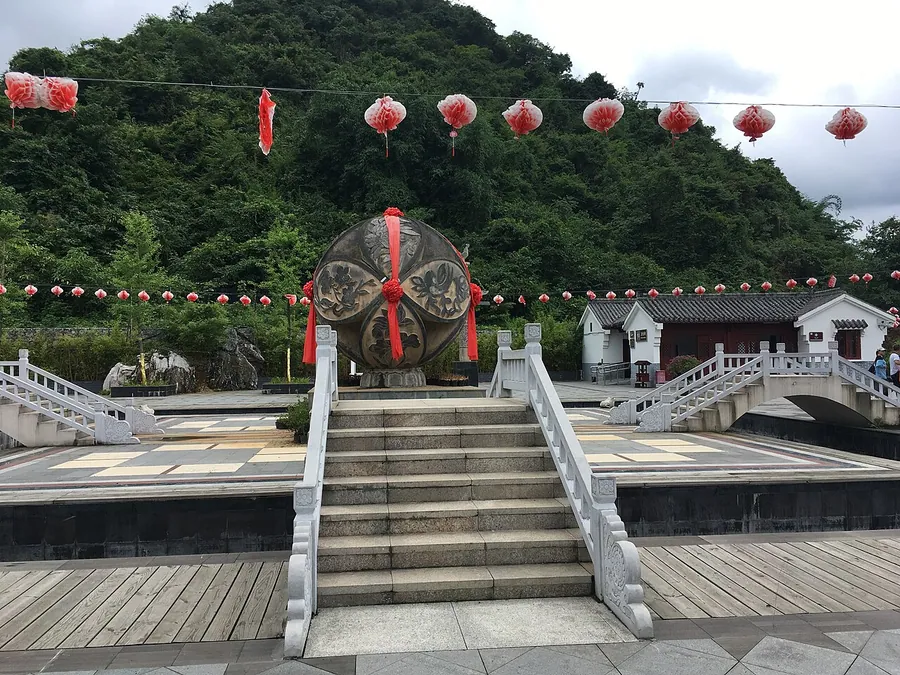
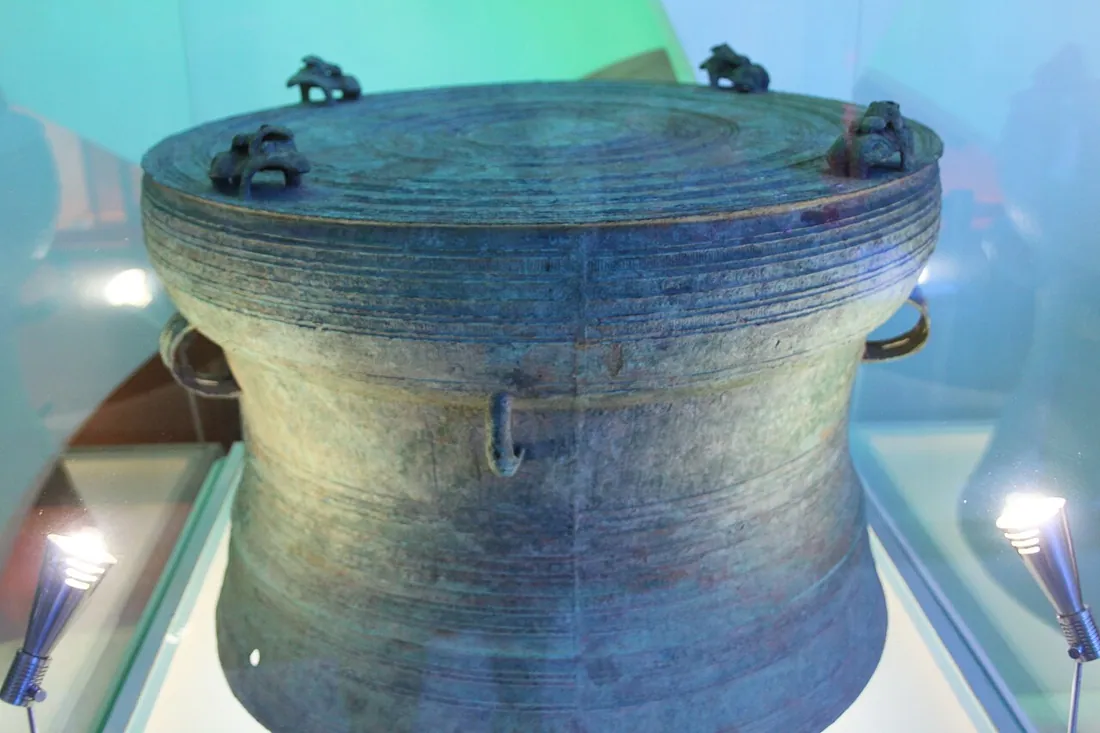
Zhuang bronze drum from the Tang dynasty

The Zhuang 壮族

China's largest ethnic minority, about a third of Guangxi's population. Their Sanyuesan festival each spring fills villages with antiphonal singing, embroidered dress, bronze drums and the five-color sticky rice.

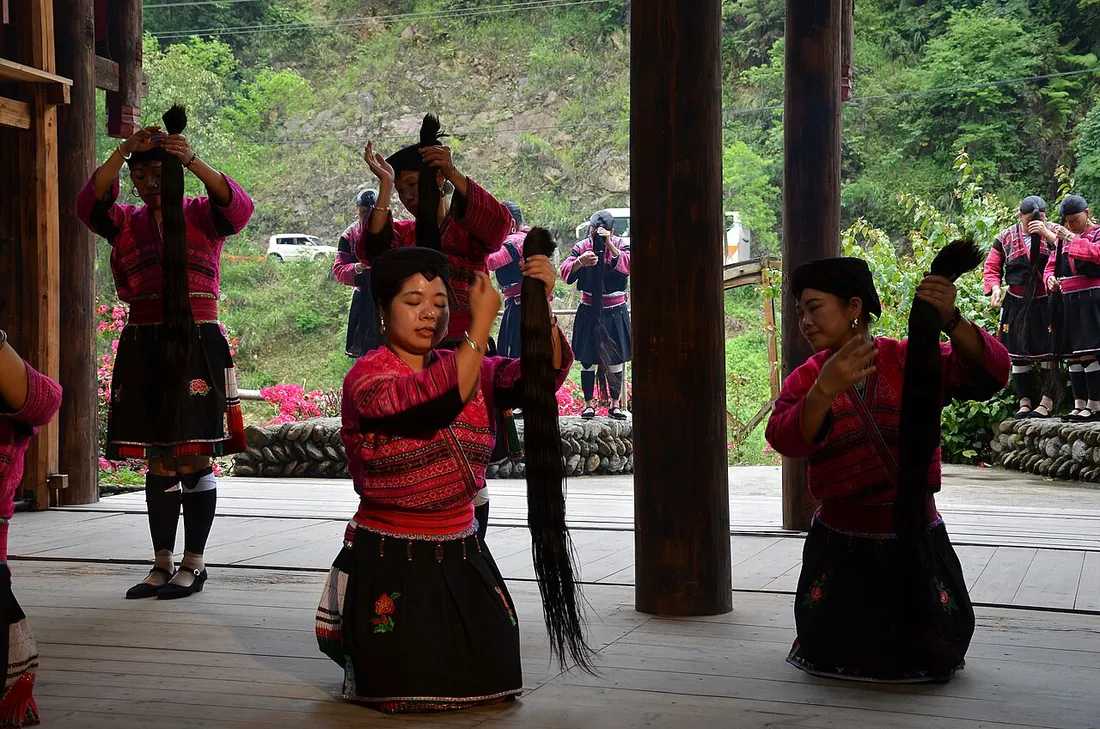
Red Yao women performing the long hair dance at Huangluo

The Yao 瑶族

Yao villages cluster in the Longji terraces and the northwest. In Huangluo, women of the Red Yao keep waist-length hair as a cultural signature, and oil tea is the household staple.

The Chengyang wind-and-rain bridge in Sanjiang

The Dong 侗族

The Dong built the Chengyang Wind and Rain Bridge near Sanjiang without a single nail, and their drum towers anchor every village. Dong polyphonic song (侗族大歌) is UNESCO-listed.

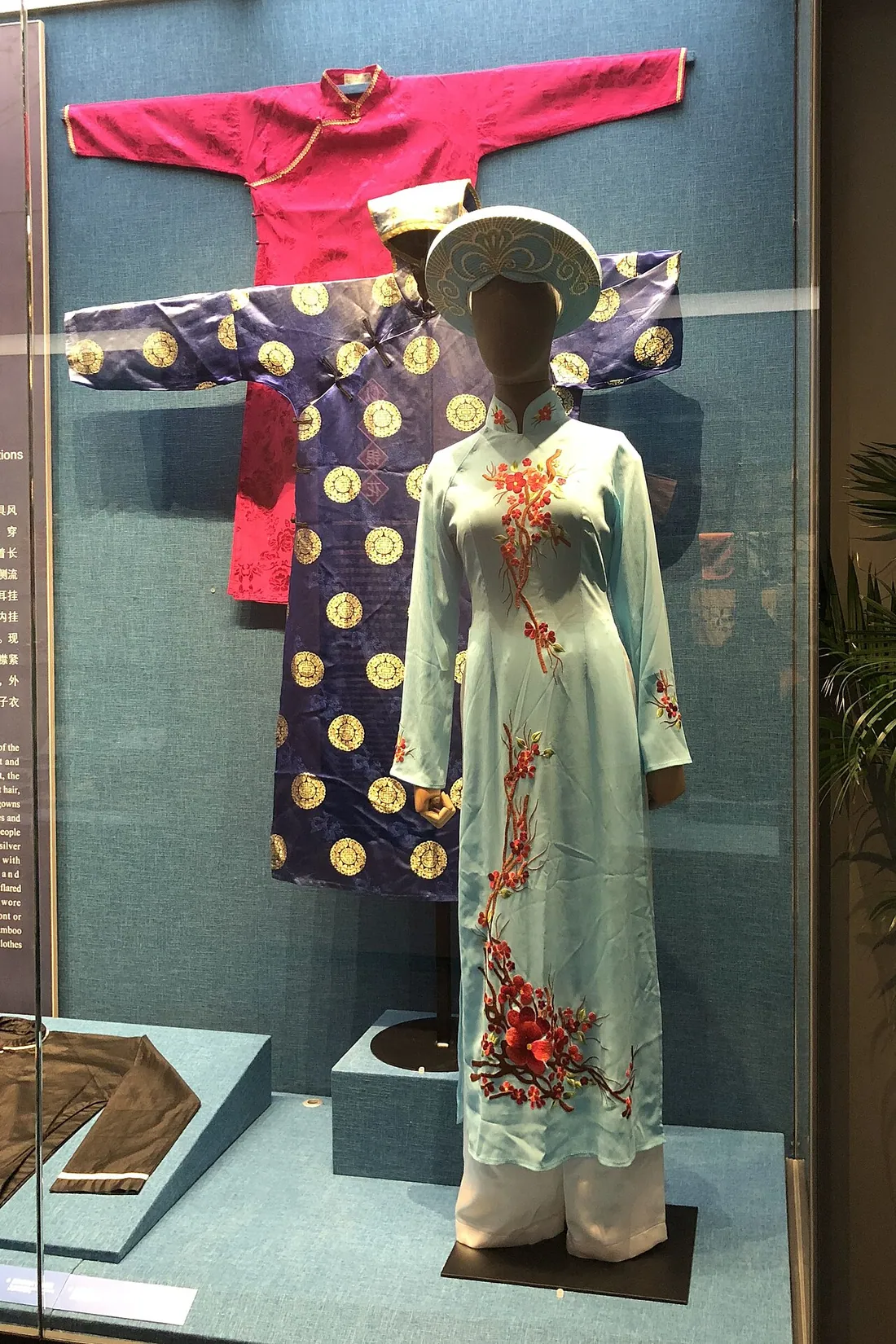
Traditional Jing ethnic clothing from the coast near Dongxing

The Jing 京族

China's only maritime minority, living on the coast near Dongxing and descended from Vietnamese fishing communities. Their Ha festival honors the sea with songs and the single-stringed duxianqin.

Festivals worth timing your trip around
Festival When What happens
Sanyuesan 三月三 3rd day of the 3rd lunar month, usually April The Zhuang's biggest festival: song gatherings, embroidered-ball tossing, bamboo-pole dancing and five-color sticky rice. Celebrated across Guangxi, best in the countryside.
Longji Clothes-Drying Festival 龙脊晒衣节 6th day of the 6th lunar month Red Yao families on the Longji terraces hang out their embroidered festival dress to air, turning the hillsides into a textile show.
Dong Song Festival 侗族大歌 Varies by village Polyphonic Dong choirs perform in Sanjiang's drum-tower squares. Combined with a Chengyang bridge visit, it is a full cultural day.
Jing Ha Festival 京族哈节 Summer, by the lunar calendar The Jing people's sea festival near Dongxing, with fishing rituals, singing and the one-stringed duxianqin.

Is Guangxi safe?

Short answer: yes. Guangxi is one of China's easier, safer regions for foreign travelers. A few honest caveats so nothing catches you off guard.

Overall safety

Guangxi is well-policed and tourist-friendly. Guilin, Yangshuo and Nanning are among the safest places in China for travelers, including solo women. Violent crime against visitors is rare.

Common tourist traps

Watch for overcharging at stalls near Li River piers and West Street, and for unlicensed taxis outside stations. Use Didi or licensed cabs, agree raft and driver prices in advance, and check the menu before ordering.

Health and food

Stick to busy stalls and bottled or boiled water. Luosifen and street food are generally safe when freshly cooked. Carry a basic medical kit; larger cities have international-standard hospitals, but rural Hechi and Longji have limited clinics.

Weather and terrain

Summer heat and humidity peak from June to August, and the Li River and Yulong River can swell after heavy rain. Karst paths and Longji's stairs are steep and can be slippery when wet; wear grippy shoes.

Border areas

The Vietnam border near Detian and Dongxing is heavily monitored. Stay within marked tourist zones, keep your passport handy, and never attempt to cross informally, which requires a separate Vietnamese visa.

Who wrote this, and why you can trust it

GX

Guangxi Guide Team

Independent Travel Editorial Team

Independent travel writers who have collectively lived in and traveled across all 14 prefectures of Guangxi for over a decade, by high-speed rail, bus and scooter. We write from firsthand experience: the 5 AM Li River sunrises, the bowl of luosifen worth crossing Liuzhou for, and the honest advice guidebooks leave out. Every restaurant, price and warning is cross-checked against current 2026 listings. We earn no commission on anything you book, and we do not accept payment for listings.

Sources for the facts

  • Population and area: Guangxi Statistical Yearbook, 2023
  • Visa policy: National Immigration Administration, 2025
  • Prices and transport: on-the-ground checks, 2026

Last updated

August 2026, with 2026 pricing.

Prices and visa rules change. We review this page quarterly.

Questions travelers ask before going

Guangxi is famous for three things above all: the Li River karst landscape around Guilin and Yangshuo (the scenery on the 20 RMB note), its status as the Zhuang autonomous region (the Zhuang are China's largest ethnic minority), and its food, led by luosifen, the snail-rice-noodle soup that went global from Liuzhou. It is also China's only region that is simultaneously coastal, landlocked and border-facing, sharing a 696 km border with Vietnam.

Yes, and it is one of the best-value regions in China for first-time and repeat visitors alike. You get world-class karst scenery (Guilin, Yangshuo, Longji), a genuine beach and island (Beihai and Weizhou), a transnational waterfall on the Vietnam border (Detian), and some of China's most distinctive food, all reachable by high-speed rail and cheaper than Beijing or Shanghai. A 5-day trip can comfortably cover the essentials.

Yes. Guangxi is a well-policed, tourist-friendly region, and cities like Guilin, Yangshuo and Nanning are among the safest places in China for travelers, including solo women. Standard precautions apply: watch for overcharging at tourist stalls, use licensed taxis or ride-hailing apps, and keep cash in remote areas like Hechi where ATMs are scarce.

October to April is the overall best window: dry, mild and comfortable across the coast and the karst. The one exception is Detian Waterfall, which is at full flow from June to October after the rains. Longji's terraces are at their most photogenic in April to June (flooded with reflective water) and September to October (golden harvest). Avoid the rainy May and the hot, humid peak of July and August unless you are chasing waterfalls.

A minimum of 5 days covers the essentials: Guilin, the Li River, Yangshuo and either the Longji terraces or Beihai. Seven days lets you add Liuzhou for luosifen and Chongzuo for Detian Waterfall, giving you the full coast, border and karst loop. Ten days adds the quieter corners of Huangyao and Hechi. Anything under 3 days should stick to Guilin and Yangshuo only.

No, Guangxi is one of China's more affordable regions. Budget travelers can manage on CNY 200 to 300 per day including guesthouses, local food and buses or trains. Mid-range travelers should budget CNY 400 to 700 per day. The main extras are the Li River cruise (CNY 190 to 500) and the Beihai-Weizhou ferry (about CNY 150 each way), both worth it.

Yes, with preparation. Guilin, Yangshuo and Beihai have guesthouse owners who speak some English, and translation apps (Google Translate with offline download, or Pleco) handle the rest. In smaller places like Hechi and Bama, expect little English, carry cash, and rely on saved screenshots of addresses and dish names. Patience and gestures go a long way.

Plenty. Beihai and Weizhou Island are Guangxi's beach and volcanic island; Chongzuo has Detian Waterfall, Asia's largest transnational waterfall on the Vietnam border; Liuzhou is the birthplace of luosifen; Huangyao is a lived-in 1,000-year-old stone town; and Hechi hides sinkhole lakes and caves in raw karst country. Guilin is the postcard, but it is roughly a third of what the region offers.

The two main gateways are Guilin Liangjiang Airport (KWL) and Nanning Wuxu Airport (NNG), both with domestic connections from Beijing, Shanghai and Guangzhou, plus some international flights. High-speed rail links Guilin, Liuzhou, Nanning and Beihai in a few hours, and the Guilin-Nanning line connects the whole loop. For most itineraries, fly or train into Guilin, work south, and fly out of Nanning or Beihai.

Yes, if you go in the right season. From June to October the falls run at full flow and are genuinely spectacular, a 200-meter-wide curtain shared with Vietnam. From November to April the river thins and the visit is less dramatic. It is a 3-hour drive from Nanning, so budget 2 days for the detour and combine it with the Mingshi Pastoral valley nearby.

Two to three days. Spend half a day on Silver Beach and the Old Street arcades, then take the ferry to Weizhou Island for a full day and one night to circle the island by scooter and eat fresh seafood. One day in Beihai alone is enough if you skip the island, but the island is the reason most people come.

Yes, if food drives your travel. Liuzhou is the birthplace of luosifen, and the bowl there, sour-spicy and deeply savory from the snail broth and fermented bamboo shoot, is the reference version. The city also has a dramatic karst riverfront and the nearby Chengyang Wind and Rain Bridge in Sanjiang County. One to two days is plenty.

Start with luosifen (snail rice noodles, the famous one), Guilin rice noodles for breakfast, and beer fish in Yangshuo. Then work through lemon duck, Huangyao tofu, Longji bamboo-tube rice, Bama hemp-oil soup, and fresh seafood on Weizhou Island. The region's food runs sour, spicy and savory rather than sweet, and noodles are the common thread.

Choose Guangxi if you want compact, high-impact scenery, beaches, a border waterfall and some of China's best noodles, all reachable in 5 to 7 days without altitude concerns. Choose Yunnan if you want highland drama, snow mountains, ancient towns like Lijiang and Dali, and greater cultural variety across 25 ethnic groups, at the cost of longer distances and real altitude. For most first-time China travelers, Guangxi is the easier, cheaper entry point.

Guangxi follows standard China visa rules. China currently offers visa-free entry to citizens of 76 countries and a 240-hour (10-day) transit visa-free policy for travelers from 55 countries across 65 entry points, including Nanning and Guilin. If you plan to visit the Vietnam border area, stay within the marked tourist zones; crossing into Vietnam requires a separate Vietnamese visa. Always confirm your specific nationality against the latest list before booking.

Yes, and it is a common route. Guangzhou is 2.5 hours from Guilin by high-speed rail, and Hong Kong connects to Guangzhou or Shenzhen by train in under an hour before continuing to Guilin. A practical loop is Hong Kong, then Guangzhou, then Guilin, Yangshuo and Beihai, flying home from Nanning. The Guilin and Nanning airports both serve the visa-free transit policy if you are continuing to a third country.

For most travelers, Guilin works best as a gateway rather than a destination. The city itself is pleasant but generic, and its main value is the Li River cruise to Yangshuo, which you can also board from Yangshuo. If you have only 2 days, use Guilin as a base for the river and the Longji terraces rather than spending a full day on the city sights alone.

Yes. Guangxi is one of China's easier regions for families: no altitude issues, short rail hops between cities, and kid-friendly activities like the Yulong River raft, the Weizhou Island ferry, and the Longji cable car. Yangshuo's flat cycling and Beihai's beaches are particularly good for children. The main consideration is the heat from June to August, when the coast and caves are better than the exposed karst viewpoints.

Possible, with planning. Noodles are the easiest route: Guilin rice noodles can be ordered without meat (素粉), and many vegetable dishes exist. Carry a note saying 我吃素 (I eat vegetarian), as kitchens outside big cities may not be familiar with veganism. Peanut oil is the default cooking oil, so strict allergy avoidance needs a printed card.

In larger cities, yes. Halal restaurants are marked with a green 清真 sign, and Guilin and Nanning have the most options. In small towns and rural areas, halal food is scarce, so stick to vegetable and egg dishes and ask about the broth. Plan meals around the bigger cities if you keep halal.

It depends on the stop. In Guilin, stay near the Two Rivers and Four Lakes; in Yangshuo, choose a village guesthouse along the Yulong River rather than noisy West Street; on Longji, sleep on the mountain in Ping'an or Jinkeng for the sunrise; and on Weizhou Island, book a homestay that will cook your market seafood. Budget CNY 150 to 400 per night for guesthouses, CNY 400 to 900 for hotels and boutique stays.

Instant luosifen packs are the easiest win, sold at any supermarket. Then Liubao dark tea from Wuzhou, monk fruit from Guilin's Yongfu county, Zhuang brocade and embroidered balls from Jingxi, and south-sea pearls from Hepu near Beihai. Buy at supermarkets and specialist shops rather than scenic-spot stalls for fairer prices.

Yes. The easiest way is Trip.com, the English version of Ctrip, which sells China rail tickets for a small service fee and accepts foreign cards. The official 12306 app is cheaper but requires a one-time in-person passport verification at a station window. Either way, you board by scanning your passport — no paper ticket needed.

The pre-trip checklist

9 things that prevent most first-trip hiccups. Tick them off and the rest is scenery.

0 of 9 done

Before you book

  • Confirm your visa: China currently offers visa-free entry to 76 countries and a 240-hour transit visa-free policy for 55 countries, including via Guilin and Nanning. Check your nationality first.
  • Book the Li River cruise (4-star CNY 350-500) a day ahead in peak season, ideally through your guesthouse.
  • Reserve a night on Longji's terraces if you want the sunrise; same-day day-trips miss it.

Before you fly

  • Set up Alipay or WeChat Pay and link a card. Mobile payment is standard everywhere.
  • Download an offline translation app (Google Translate offline or Pleco) and save screenshots of addresses and dish names.
  • Carry some cash for villages in Hechi and Longji, where ATMs are scarce.

On the road

  • Pack grippy shoes for Longji's stairs and Huangyao's cobblestones, plus rain gear for the May-to-August wet season.
  • Bring motion-sickness medicine for the Beihai-Weizhou ferry, which is rough in wind.
  • Keep your passport handy in border areas, and stay within marked tourist zones.

Ready when you are

Guangxi is the easiest yes in southwest China

Compact, altitude-free and cheap. Start in Guilin, work south to the coast, and give it seven days.